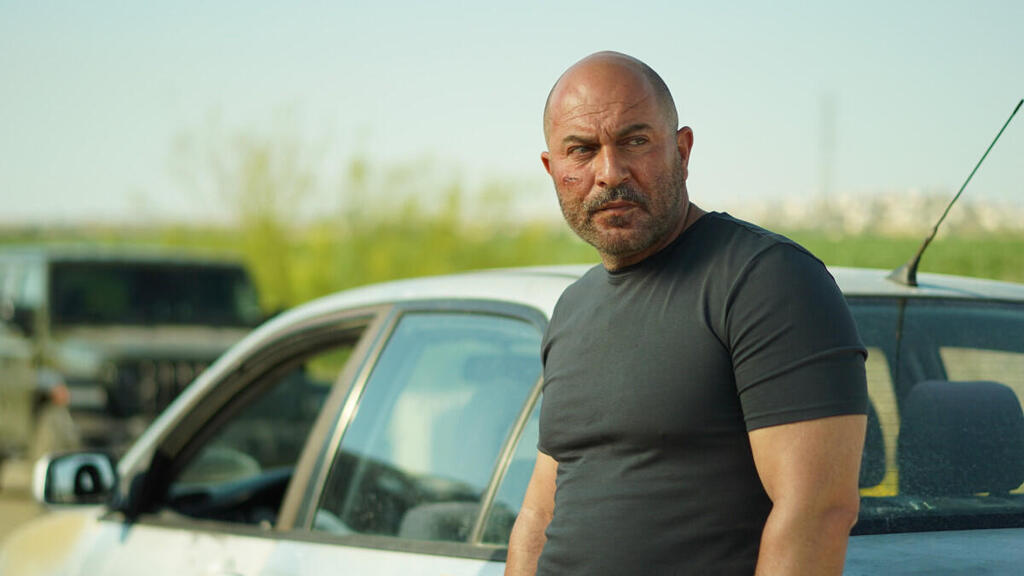
Three years.
It’s been three years since October 7, 2023, the day when Hamas terrorists invaded Israel on a Shabbat morning and a Jewish holiday. Three years since at least 1,200 innocent people were brutally murdered and more than 3,400 were injured in their homes, at a music festival, on the roads, and in places where they thought they would be safe. Three years since 251 hostages were dragged into Gaza.
Three years since the worst attack on the Jewish people since the Holocaust.
Three years later, thankfully, all the hostages are now home again — though, sadly, not all of them made it back alive. The weekly Run for Their Lives vigils have ended.
But a rise in antisemitism around the world and hateful incidents pretty much daily have prevented many of us from fully processing or grieving for what happened that day. And we weren’t even there.
Suffice it to say, for many people, October 7 remains an open wound that still hasn’t healed.
Three years later, and in many ways, it still feels like yesterday.
That’s why I held off on watching episodes 7 and 8 of Fauda season 5.
I knew what they were about. I knew they depicted October 7. I knew they would show the massacre and the horror of that day. And after everything I’ve already watched, read, heard, and seen about October 7 over the past three years, including during my trip to Israel in June 2024, part of me wondered whether I really needed to see this dramatization of it.
I’d already watched the season’s first six episodes, but then I paused. This past weekend, I finally watched episodes 7 and 8. I’m glad I did.
In fact, I think everyone should watch them.
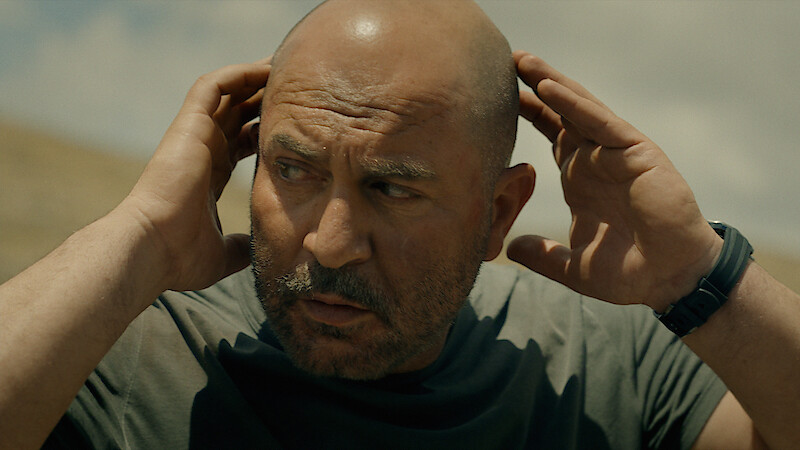
If you don’t know, Fauda is an Israeli television series that follows Doron (played by series co-creator Lior Raz, who also starred in the movie Tuner), a former member of an elite Israeli counterterrorism unit, who is drawn back into the world of undercover operations. Set against the Israeli-Palestinian conflict, the series follows Doron and his team as they pursue terrorists while navigating the complicated personal, moral, and emotional consequences of their work. It’s an action-packed show, but at its heart, Fauda is also about the human cost of violence — and what happens to the people who have to live with it.
Interestingly, fauda is an Arabic word that means “chaos.” It’s an appropriate name for a series in which carefully planned operations often go off-track.
In the U.S. and in many other countries around the world, the show is available to watch on Netflix. And people are definitely watching.
Since the release of season 5 on Netflix last month, Fauda has become a genuine global hit, reaching the streamer’s Top 10 in more than 40 countries and attracting 2.1 million viewers worldwide in its first full week. Perhaps most remarkably, it reached No. 1 on Netflix in Lebanon, and also charted strongly elsewhere in the Middle East, including in Jordan, the UAE, Qatar, Bahrain, Egypt, Turkey, and Morocco, despite the show’s deeply Israeli perspective.
When the fifth season begins, Doron is a “broken warrior,” suffering from PTSD and still trying to process what happened to him on October 7. Then his former colleagues Eli and Steve set out on an unauthorized mission of revenge against a Hamas terrorist who killed members of Eli’s family. Doron follows Eli and Steve to Marseille, France, reluctantly pulled back into the world he had tried to leave behind.
What begins as a personal quest for revenge soon develops into a much larger operation to uncover and stop a new terrorist threat against Israel, while Doron and his fellow fighters confront the trauma and emotional scars they’ve been carrying with them for two years.
(The cast this season also includes Mélanie Laurent, from Inglourious Basterds.)
Most of the season takes place in 2025, in France, but episodes 7 and 8 flash back to Israel on October 7, 2023.
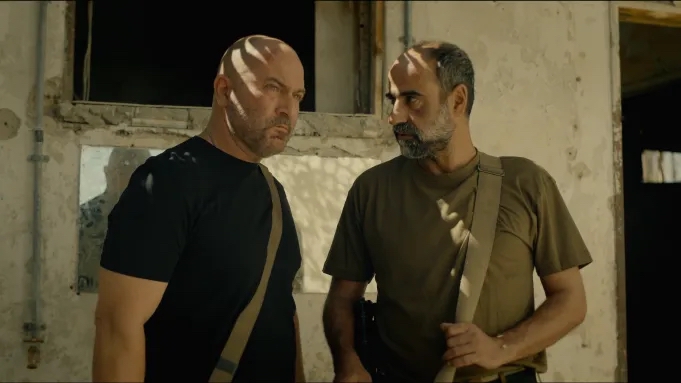
Fauda doesn’t treat what happened that day as simply another plot point in an action series. It doesn’t approach October 7 as history. Rather, it tries to recreate the terrifying chaos and uncertainty of that morning — the rockets, the terrorists crossing into Israel, the desperate calls for help, families hiding in their homes, Nova festival attendees hiding in a trash container, others hiding in a bomb shelter, people running for their lives, and, perhaps most frightening of all, the realization that nobody seemed to know what was happening or how enormous the attack really was.
The episodes are not an easy watch, to put it mildly. No wonder they both begin with a warning, explaining that they return viewers to “that terrible day” and contain images and sounds that may be difficult to watch. The on-screen text explains that the episodes can be skipped without affecting the main storyline.
What makes the episodes so powerful is that we see everything through the eyes of characters we “know” and have been invested in for more than 10 years. Doron, Eli, Steve, and the others are normally the people who run toward danger. They’re trained for precisely this kind of situation. But on October 7, even they are overwhelmed by the scale and speed of what’s happening. They can’t be in multiple places at once; they can’t save everyone. Suddenly, these seemingly invincible characters are experiencing the same fear and helplessness that so many real Israelis experienced that morning.
Even though we know the fate of the lead characters based on what’s happened in previous episodes, these episodes — which have a combined length of 73 minutes — are suspenseful and keep you on the edge of your seat as they progress toward the inevitable.
To state the obvious, the episodes are “not a documentary,” as Yaakov Zada Daniel, who plays Eli, told Ynet earlier this year. But as co-creator Avi Issacharoff explained on a recent episode of Dan Senor’s Call Me Back podcast, “almost each and every scene that you see in those two episodes is taken or inspired by true events.”
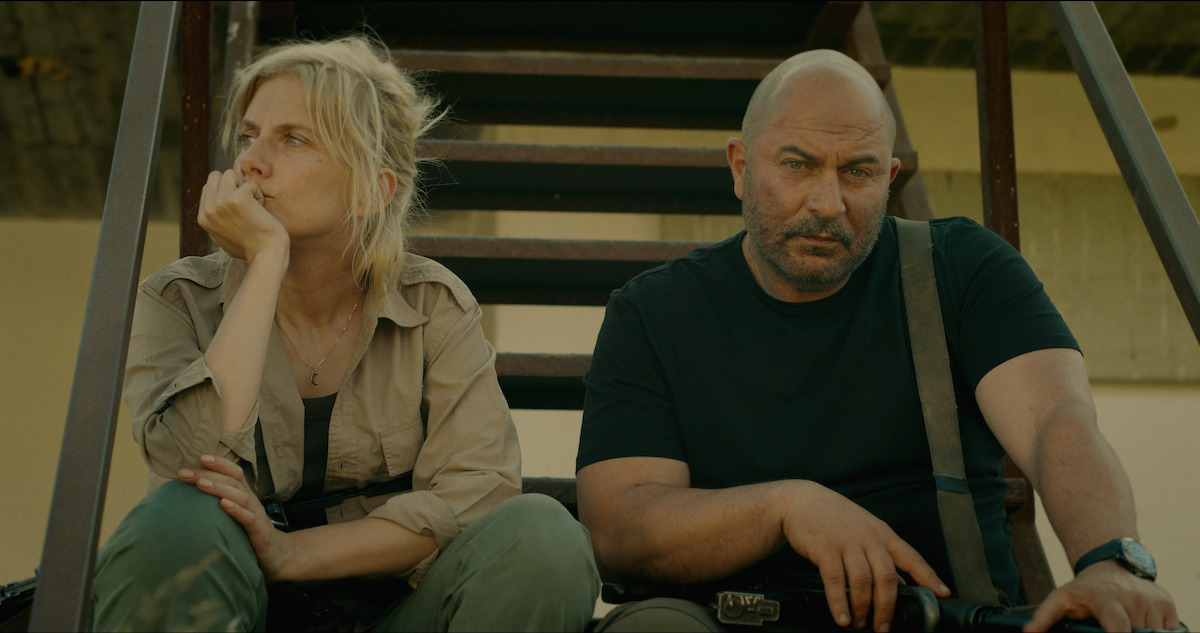
Director Omri Givon has said that the people making the episodes wrestled with how much to show: “You don’t want to exploit the horror or make a snuff film, but you also don’t want to understate it.” It’s a fine line, for sure, and the creators do a brilliant job of walking it. Fauda doesn’t need to dramatize every terrible thing for us to understand what’s happening. Sometimes just the sound of gunfire, or the sight of a terrified face, a family desperately waiting behind a locked door, a roadside bomb shelter, or a woman being taken into a bedroom by a terrorist who then closes the door behind them is enough.
Three years later, we have photographs and videos. We have the testimony of survivors and the families of those who were murdered and kidnapped. We have documentaries, books, miniseries, news reports, and other first-hand accounts. We even have Hamas’ own footage of their attack. There’s no shortage of evidence or documentation.
And yet, seeing October 7 through Fauda’s eyes is worthwhile. It’s another way of bearing witness.
That’s what I kept thinking about while watching these episodes: Bearing witness.
I’ve written before about the importance of remembering October 7 — not just remembering the date but remembering the people. The families. The communities. The hostages. The survivors. The soldiers and first responders. The people who went to bed the night before expecting an ordinary Saturday, and who woke up unexpectedly at the crack of dawn with their world suddenly turned upside down.
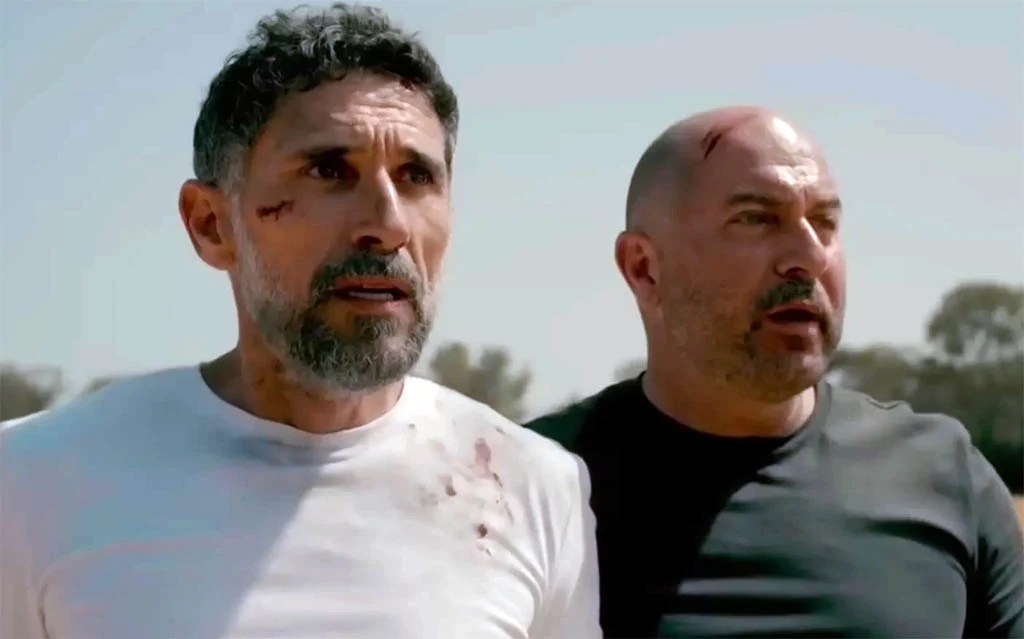
Three years later, I worry about what happens when October 7 becomes something that happened “three years ago” — just like 9/11 is now something that happened “25 years ago.” Time has a way of turning even the most unimaginable events into history. Details get fuzzy. Denial and conspiracy theories take root. That’s why every story from that day matters. Even the fictional ones, like Fauda. They help us process what happened, and they prevent us from becoming numb.
Three years later, I don’t want October 7 to become just another date. I don’t want the murdered to become names we vaguely recognize. I don’t want the hostages to become a story we once followed. And I don’t want the people who survived to be expected to simply “move on” because time has passed.
We need to remember.
We need to listen.
We need to keep telling the stories.
And we need to keep looking, even when looking isn’t easy.
That’s why I think everyone should watch this new season of Fauda — especially episodes 7 and 8. Watch them because they give you another way to understand what October 7 felt like for the people who were there, and who are still living with pain, trauma, and grief. More importantly, watch them because remembering is everyone’s responsibility.
Three years later, we owe it to the people who were murdered, to the hostages who were taken from their homes, to the people who survived, and to the people who are still suffering, to keep remembering.
October 7 happened. We remember. And we must never allow the world to forget.


What say you? Leave a comment here.