
The metaphor is almost too obvious.
In Daniel Roher’s Tuner, Leo Woodall plays Niki, a talented young piano tuner whose life is complicated by hyperacusis, a neurological condition that causes everyday sounds to be perceived as painfully loud or overwhelming. To cope, he wears a hearing aid. When things are less predictable, he wears special noise-cancelling headphones.
The film is hitting theaters at the start of the summer movie season, a time of year when loud and overwhelming are kind of the trend, and when more delicate sounds — the kind Niki helps clients preserve — require a more trained ear.
In that same spirit, Tuner is counter-programming for moviegoers with slightly more refined tastes, a film that stands out among the usual summer offerings at the multiplex.
Roher, the Oscar-winning documentarian behind Navalny, makes an impressive leap into narrative filmmaking here, co-writing and directing a stylish film that’s equal parts character study and psychological drama. Appropriately enough, the result isn’t perfect (more on that later), but it’s compelling for a good amount of its running time, making it a strong recommendation in my book.
Niki works alongside his mentor, Harry Horowitz (played by Dustin Hoffman, charming as ever in a supporting role), tuning pianos for wealthy clients. Niki’s hyperacusis ended his dreams of becoming a concert pianist, but it left him with extraordinarily precise hearing, making him the ideal person for the profession.
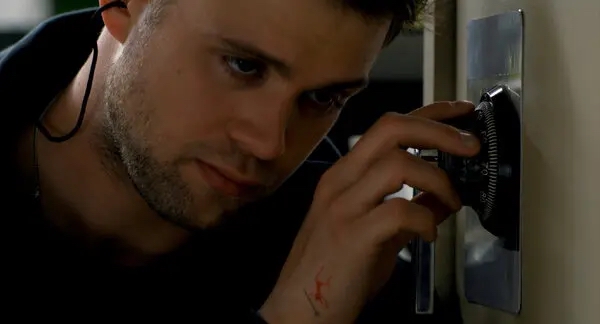
On one job, criminals realize that Niki’s remarkable ability to distinguish tiny sounds makes him uniquely suited to cracking safes because he can hear the internal mechanisms of locks. Financial needs draw Niki into the world of heists and organized crime, and he soon finds himself balancing his loyalty to Harry and his wife, Marla (Tovah Feldshuh, from Nobody Wants This), a budding romance with music student Ruthie (Havana Rose Liu), and the increasingly dangerous consequences of his new double life.
At its core, Tuner is about a talented but damaged young man trying to figure out what to do with a gift that feels as much like a curse as a blessing. Woodall (season two of The White Lotus) portrays this nicely, in an understated performance that nevertheless keeps you engaged. He never pushes too hard, allowing Niki’s anxieties, frustrations, and quiet resilience to emerge naturally. It’s a performance built on small gestures and subtle reactions, and it works beautifully.
The film’s sound design, which immerses viewers in Niki’s hyperacusis and turns the act of piano tuning and safe-cracking into something surprisingly suspenseful, is also impressive.

And I really appreciated the film’s Jewish and Israeli aspects, which are woven organically into the story rather than treated as cultural window dressing. For example: In addition to Hoffman and Feldshuh, Tuner’s cast includes Lior Raz, the Israeli actor, screenwriter, and producer best known as the co-creator and star of the hit television series Fauda. His Uri is one of multiple characters in the film who speak Hebrew. Raz even gets to deliver a line about how paying a shiva call is a mitzvah. These elements give Tuner a distinct identity and texture that helps separate it from more generic dramas.
At one point in the film, Niki says, “Tuning a piano is about creating harmony out of chaos, and to do that, you’ve got to be comfortable with imperfection.” The context is that Niki is explaining why trying to make every single note on a piano sound perfect ruins the overall experience, but it’s a line that sums up the entire movie, thematically and literally.
Literally, because the film itself loses its footing in the final third. What begins as a nuanced and intriguing crime caper goes a bit off the rails as Niki makes some questionable choices and the narrative becomes noticeably shakier.
Until that final stretch, though, Tuner is smart, engaging, grown-up filmmaking. If you’re comfortable with an entertaining but imperfect movie, then you should seek out this one instead of other, louder fare.
I’m giving Tuner a B+.


2 Responses to “In Tune”