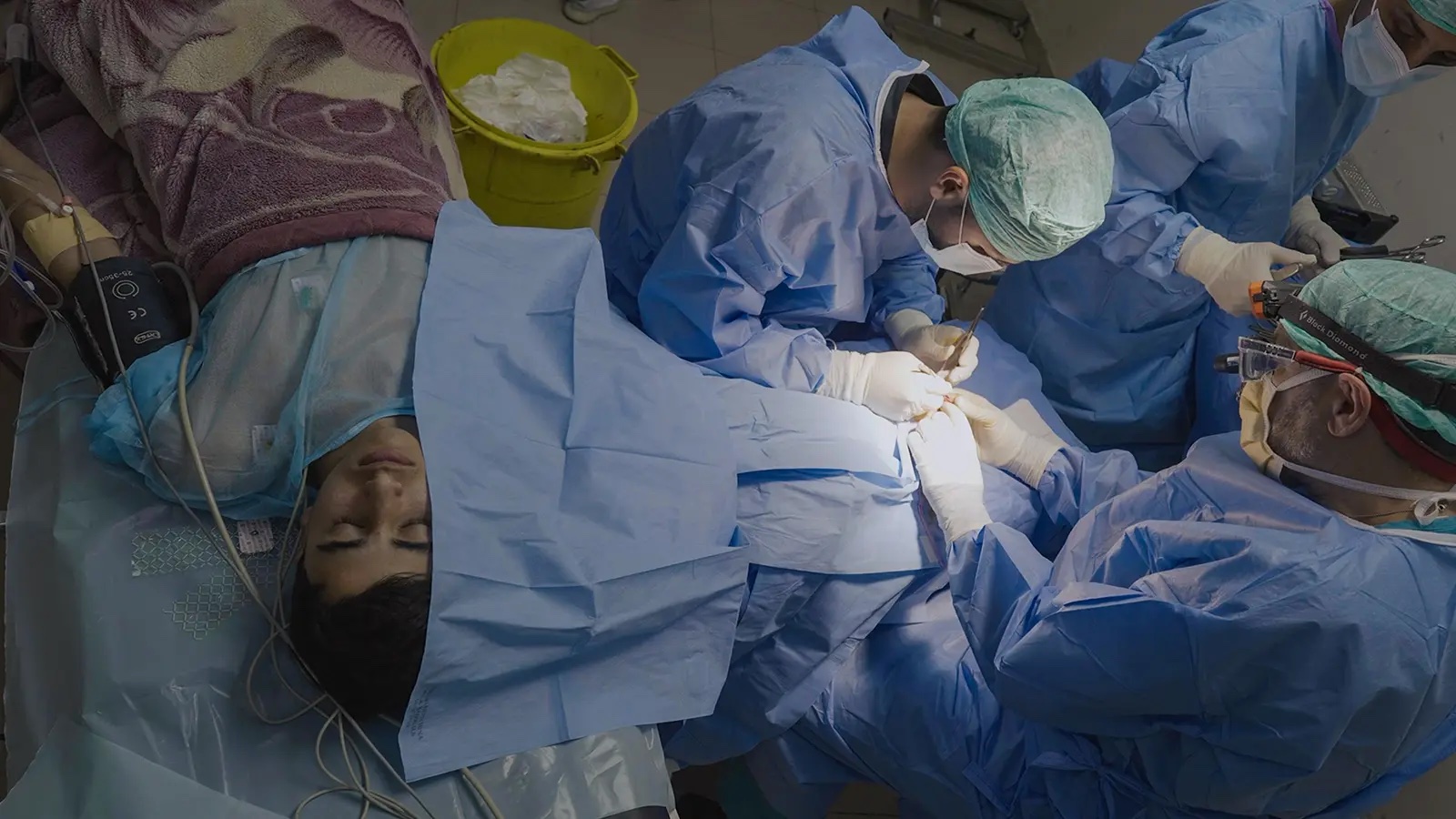
Poh Si Teng’s American Doctor is a film that’s designed to make viewers angry. Specifically, to make them angry at Israel.
Of course, it’s not unusual for a documentary to take a side and have a point of view. Usually, a clear perspective is a distinguishing factor for a documentary. And it’s not unusual for filmmakers to use selective editing to make their case.
But in the case of this documentary, the point of view borders on propaganda. (Not unlike NAZA, the controversial film that garnered a lot of attention at the recent Venice Film Festival, but we’ll talk about that one another time.)
American Doctor follows three American physicians — one Palestinian, one Jewish, and one Zoroastrian — who treated patients in Gaza during Israel’s military campaign that was in response to Hamas’ attack on Israel on October 7, 2023. But you wouldn’t know that cause-and-effect from watching the film. Through the experiences of Dr. Thaer Ahmad, Dr. Mark Perlmutter, and Dr. Feroze Sidhwa, the film shows viewers the destruction of Gaza’s medical infrastructure and argues that Israel and the United States bear sole responsibility for the humanitarian catastrophe that took place over the last three years.
So, yes, it presents the consequences of the Israel-Gaza war, which are real and undeniable. But it gives insufficient attention to the circumstances that led to the war in the first place or the responsibility that Hamas has for so much pain and suffering. That lack of important context means the film is, fundamentally, a prosecution of Israel — and its biggest weakness is the part of the story it leaves out.
(None of this is a surprise considering the film is a release from the pro-Palestinian distributor, Watermelon Pictures.)
Now, before we go any further, I need to say that I have not actually seen American Doctor. I have no plans to. That means this post is not a review. I cannot evaluate the film’s camerawork or editing, the credibility of its testimonies, or the way every allegation is presented and corroborated.
But since American Doctor is now in a lot of theaters (including in Boston at the Coolidge Corner Theatre) and will surely be getting plenty of attention from a media and social media ecosystem that’s superficial and decidedly anti-Israel (though not necessarily pro-Palestinian), I felt it was important to write about it anyway.
After all, much of the discourse around the film will take place before most people have seen it — if they see it at all. (Ahem. Guilty.) American Doctor surely will not be a blockbuster on the level of Spider-Man: Brand New Day. So, the relevant question is whether people who do see the film will go into it informed with a balanced perspective. This post is my attempt to help that cause.
And from that perspective, there are substantial reasons for skepticism.
The film’s central problem is not the reality of Palestinian suffering; again, I’m not denying that it exists or that the physicians featured here who treat wounded patients deserve respect for their commitment to saving lives. It’s that the film makes a leap from documenting that suffering to assigning responsibility, intent, and criminality without always establishing the necessary evidence or context.
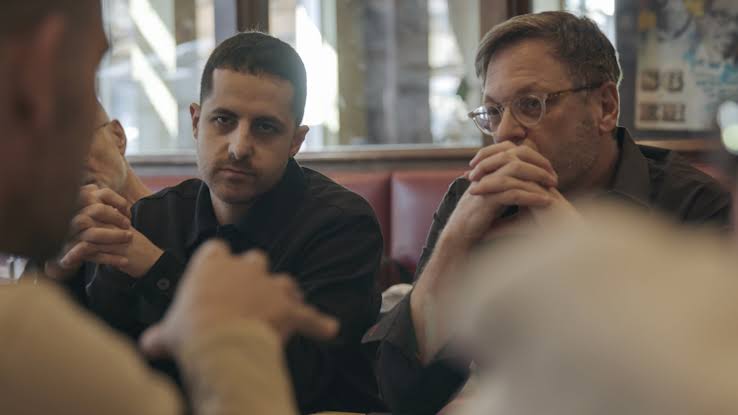
Consider the source: The documentary asks viewers to see the war primarily through the experiences of three doctors who’ve become outspoken critics of Israel. That gives American Doctor considerable emotional power, but it also creates a serious problem of perspective. The doctors are witnesses to the consequences of war. They are also biased when it comes to the actions of Hamas on October 7 and the military campaign that followed.
Remember, on October 7, Hamas and other Palestinian armed groups attacked Israeli communities and a music festival, on a Jewish holiday, killing approximately 1,200 people and taking more than 250 hostages — including a 9-month-old child.
That is not incidental background. It is essential context for why there was a war.

October 7 was not an abstract political dispute. It was a mass-casualty attack on Israel’s families and their country, an attempted genocide, and the worst attack on the Jewish people since the Holocaust. Afterward, Israel faced the question of how to prevent Hamas from ever carrying out another attack of the same magnitude, and how to do so while Hamas embedded itself within civilian infrastructure, including hospitals, putting lots of innocent people at risk.
American Doctor gives plenty of attention to Israeli attacks on those facilities, but it gives hardly any attention to the fact that Hamas uses them for military purposes. It is well reported that in those hospitals, the terrorist organization held, tortured, and murdered hostages. (Most notably, Noa Marciano, who was killed in Shifa Hospital.) The buildings also contained entry points to Hamas’ massive network of underground tunnels, where innocent civilians were forbidden to go.
That is a critical omission.
International humanitarian law gives hospitals special protection, but that protection is not absolute if a facility is used for military purposes. Even then, however, Israel remains bound by requirements concerning warnings, proportionality, and precautions — which it often gives before an attack.
My point is not that Israel is completely innocent, or that every allegation about Hamas should automatically be believed. Allegations on both sides have been disputed, and many have been proven true (including that the “attack” on Al-Ahli Arab Hospital in Gaza was actually the result of a misfired rocket by Hamas. Even The New York Times admitted it got that one wrong in its initial coverage of the incident).
But the reverse assumption — that because these doctors did not personally see Hamas activity, Israel’s allegations can simply be dismissed — is equally unjustified.
Doctors see patients. And in Gaza, under Hamas rule, foreign doctors like these three are often used as tools of propaganda. So, they do not necessarily see weapons storage, command structures, tunnels, or military operations occurring right under their noses. If they do, they are forbidden from speaking about it. They must stick to the script. They are there for a purpose, and that purpose is not just treating patients.
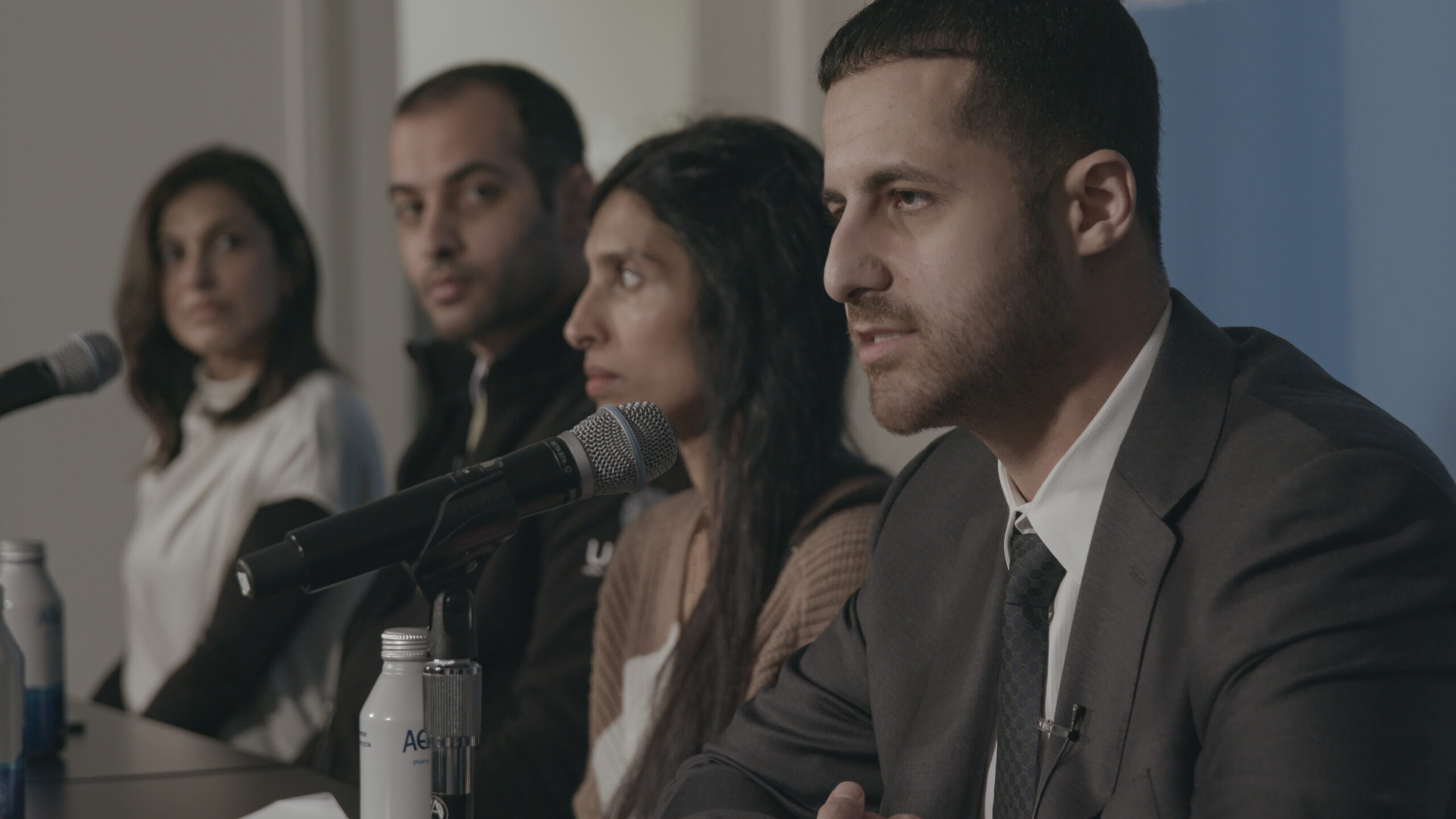
Another point to consider is the presence of Dr. Mark Perlmutter, a Jewish American physician who strongly criticizes Israel. The filmmakers clearly believe his inclusion gives them credibility and allows them to say, “Look! Even the Jews don’t agree with this war.” Alas, one Jewish perspective does not represent “the Jewish perspective.”
Perhaps the film’s greatest moral weakness is that it risks turning Palestinian suffering into the central measure of the war while leaving Israeli suffering largely outside the frame.
There are innocent people on both sides who deserve to be seen as individuals rather than as pawns in a political game.
Supporting Israel does not mean denying Palestinian suffering. It requires insisting that Palestinian suffering be understood alongside the events that produced the war — including October 7 and Hamas’s role in Gaza in the years preceding and following it.
American Doctor may succeed brilliantly at documenting what its doctors experienced. It may be a compelling, emotionally rich film. I have no idea. But I do know it deserves much greater scrutiny than it’s likely to get in these fractured times.
So, see the film if you must. (For the record, I’m not recommending that you do.) Just know that you’ll only be seeing one side of the equation. While these doctors were doing their work, there were Israeli hostages close by, and Israeli soldiers fighting to protect their people from a terrorist organization intent on their country’s destruction. If Hamas took down its own people in the process — as well as these doctors — that, to them, would be a worthy sacrifice.
A serious portrayal of the lives put at risk during the war must make room for all of those realities.


My wife and I saw “American Doctor” last night at the Coolidge Corner Theatre. We’re Jewish, in our late 60s and mid-70s, and were raised to believe in and support the creation, preservation, and defense of Israel as a Jewish state. I agree with your critique that it would have been better contextually if the film had begun with equally vivid coverage of the atrocities Hamas committed against civilians on October 7, 2023. From what I saw in the film, combined with everything I’ve read and seen elsewhere, Israel’s response over these three years has been wildly disproportionate and unjustifiable. I have heard enough Jewish Israeli voices expressing dehumanization of Palestinians to believe that the Netanyahu government, and therefore elements of the IDF, have been committing grotesque war crimes in their campaign to extinguish Hamas. Blaming Hamas’ tactic of intentionally exposing innocent civilians to the death, mutilation, and destruction Israel has committed in no way amounts to any justification for what Israel and the United States have done and continue to do. The resulting loss of innocent life, limbs, homes, and infrastructure in Gaza has made it massively easier for the rest of the world to condemn Israel and to support its eventual (perhaps inevitable) elimination. Evil as it is, Hamas could not have planned this better, and Israel has foolishly and hubristically played into its bloody hands. Your very first comment, that the film would make viewers very angry at Israel, was spot on. I am one such viewer.
Thank you for reading the post and leaving a comment.