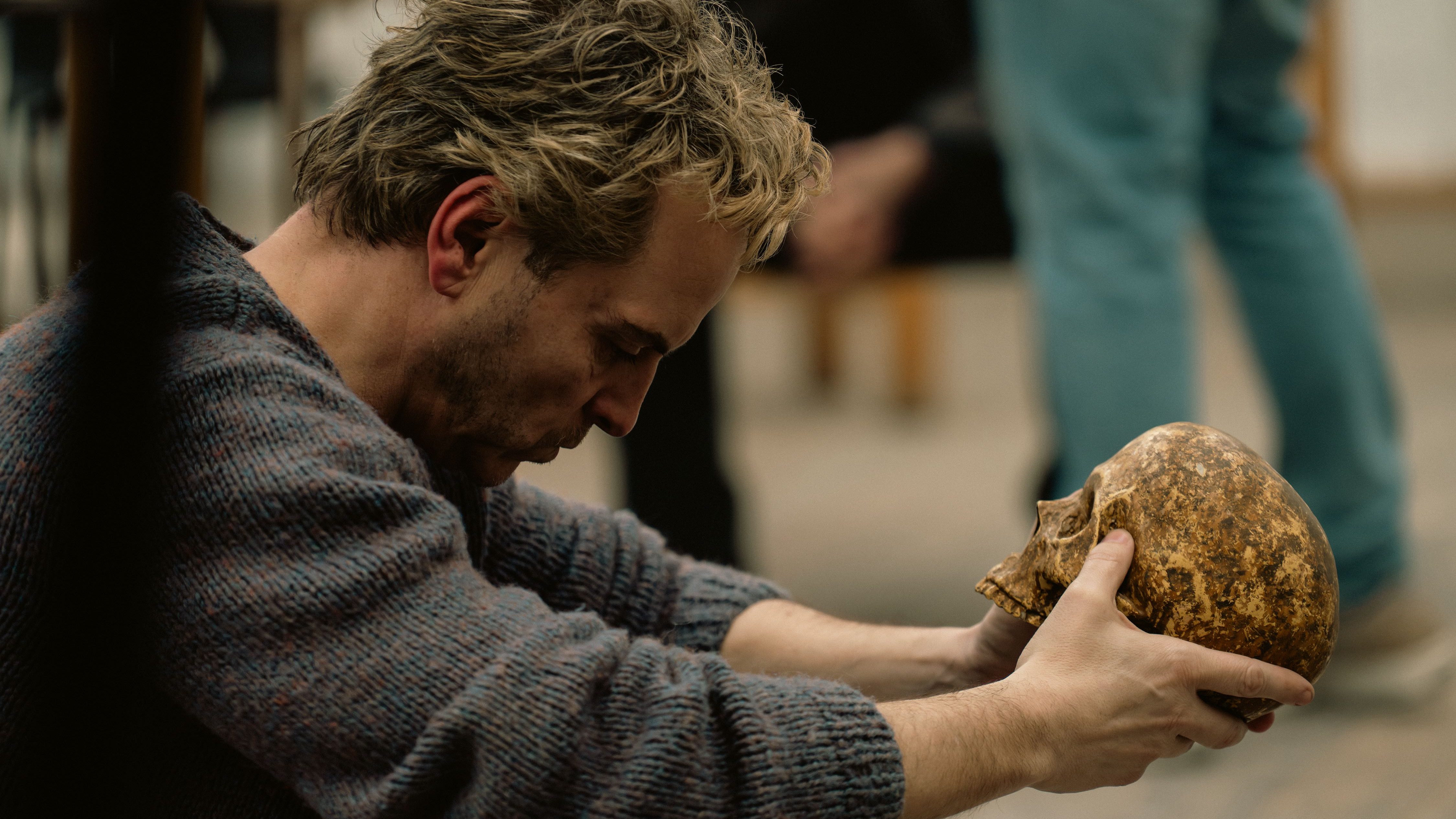
Few lines in the English language are as well known or carry as much weight as “To be, or not to be.”
They take on an especially profound meaning in Elsinore, director Simon Stone’s beautiful and deeply affecting film about an actor confronting his own mortality while preparing to star in one of William Shakespeare’s most famous plays.
Anchored by a magnificent performance by Andrew Scott, the film is a moving exploration of life, death, friendship, and the extraordinary power of art to give meaning to even our most difficult experiences.
Scott plays Ian Charleson, the Scottish actor best known for his work in Chariots of Fire, winner of the Oscar for Best Picture in 1982 — even though more people know the theme music than the film itself.
Seven years later, in 1989, we watch as Daniel Day-Lewis abruptly leaves a production of Hamlet at London’s National Theatre mid-show. (True story.) Charleson is then offered the title role, one he’s dreamed of playing. “It’s the greatest part you can play, in the greatest theater,” he says. There’s just one problem: Charleson had just been diagnosed as HIV+, a condition he wants to keep private.
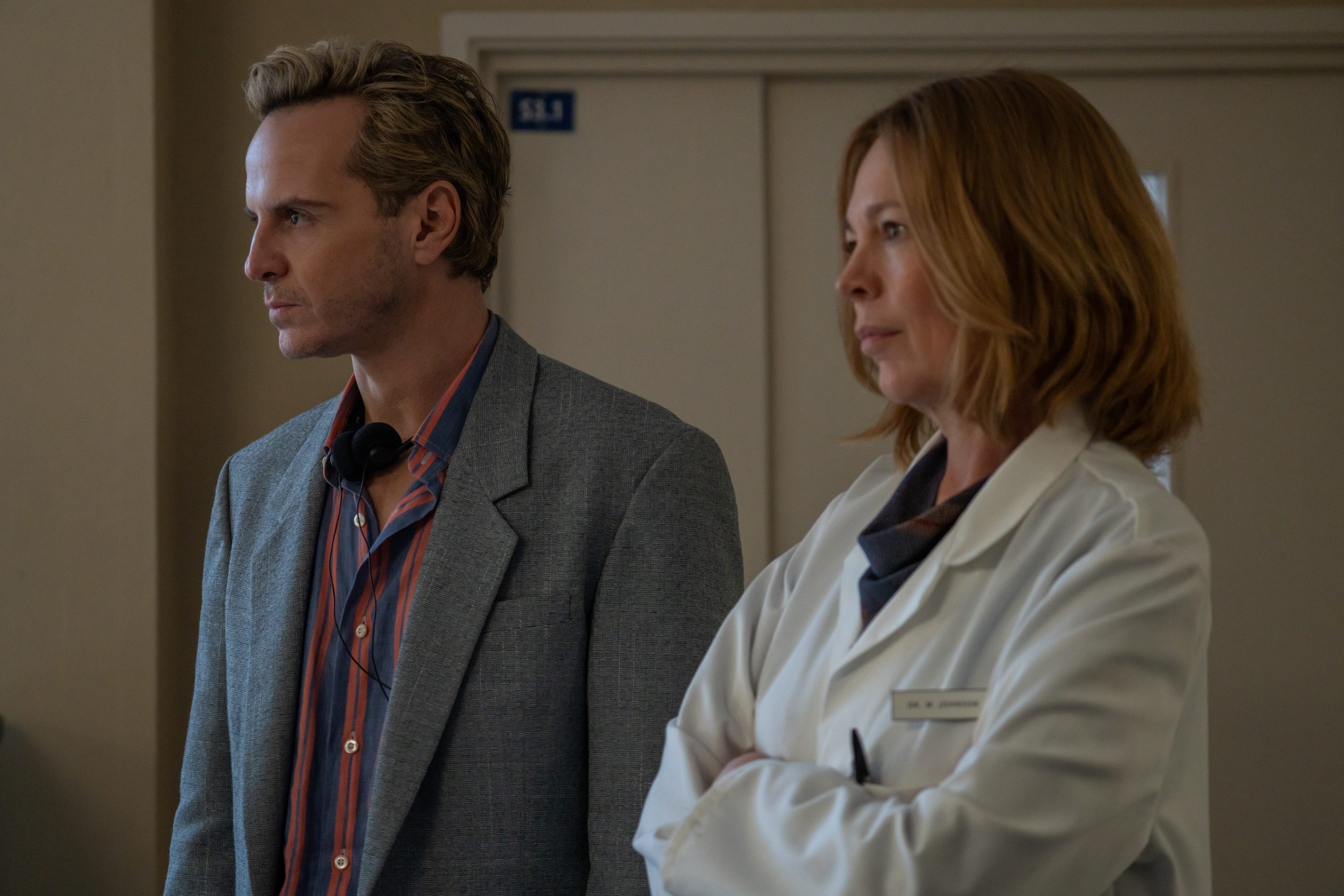
Against the wishes of his doctor, Dr. Margaret Johnson (Olivia Colman, reuniting with Scott seven years after they both starred on Fleabag), who wants Charleson to abandon the role to conserve his strength, he throws himself into the preparation. The play’s the thing, right? Charleson’s determination to take on one of the most demanding roles in theater while confronting the very real possibility that he might not live to see the end of the production forms the crux of the film.
As Charleson navigates rehearsals, performances, hospital visits, and the increasingly difficult realities of his illness, he’s supported by a close circle of friends and colleagues. Billie Piper is wonderful as Patsy, Charleson’s closest friend. Johnny Flynn plays director Richard Eyre, one of the few who know Charleson’s situation, and who is reluctant to let him go ahead with the production. Joe Locke plays a fellow AIDS patient who befriends Charleson in the hospital. And David Dawson is particularly affecting as filmmaker Derek Jarman, himself living with AIDS, who resents that Charleson has forgone a life in gay films for “heterosexual charades” like Chariots, and who wishes that Charleson would speak publicly about the disease.
But the film belongs to Scott, for obvious reasons. His portrayal of Charleson is astonishing, not because it’s a grand acting achievement, but because it feels so completely lived in. There’s wit, charm, frustration, vulnerability, and an almost stubborn determination to keep going. Scott, who was so good in All of Us Strangers (one of my favorite films of 2023), captures a man who refuses to be defined by his illness, even as that illness increasingly dictates the terms of his existence. He never turns Charleson into a saint or a symbol. He’s simply a complicated, funny, occasionally difficult human being who loves his work and wants to keep doing it.
Scott will surely be giving John Malkovich some serious competition for awards this season. If there’s any justice, the spoils will be split evenly between the two.
(Fun fact: Scott has played Hamlet before, in 2017, in a production at London’s Almeida Theatre that later transferred to the West End.)
Elsinore‘s relationship with Hamlet is especially poignant. Shakespeare’s words become something more than dialogue spoken on a stage. They begin to echo Charleson’s own circumstances, giving familiar passages an entirely different weight. Questions about the nature of life and death, the inevitability of mortality, and what it means to endure take on an almost unbearably personal resonance.
One of the film’s most charming moments is when Dr. Johnson tells Charleson that if she’s going to treat him while he performs the role, “there is to be no more talk of death.” That might be tricky, he replies. “It’s one of the central themes of the play.”
When Hamlet contemplates the extraordinary complexity of being human, we’re also watching Charleson struggle to hold on to everything that makes him who he is. And the idea that there’s a time and a purpose to things, even when we cannot understand them, becomes increasingly meaningful.

Stone, working from a screenplay by Stephen Beresford, handles this material with considerable sensitivity. The film moves between the theater and the hospital, between the exhilaration of performing and the exhausting realities of treatment, finding connections between the two without ever making them feel forced. It also captures the fear, isolation, and prejudice surrounding the AIDS epidemic in the late 1980s, while making room for the friendships, humor, and sense of community that helped people survive it.
What makes Elsinore so special, though, is that it never loses sight of the life within this story about death. There’s genuine joy here, along with the sadness, and a profound appreciation for the people who show up for one another when it matters most. Charleson’s performances become an extraordinary act of defiance, but also an expression of love: for his craft, for his colleagues, and for the experience of being alive.
Unlike last year’s Hamnet, Chloe Zhao’s solid but overcooked film about the story behind Hamlet, Elsinore is easily one of this year’s best films. It’s genuinely moving, and elevated by a performance from Scott that deserves to be seen and remembered. Yes, it’s a film about death. But even more than that, it’s a reminder that while performances end and lives are finite, the things we leave behind can endure.
Get thee to a theater to see this one immediately.
I’m giving Elsinore an A.


What say you? Leave a comment here.