Chances are good you already know whether you’re going to see Wicked: For Good. That’s because, at this point, between the long-running Broadway show and the award-winning first film, the Wicked universe has garnered a large, devoted fanbase.
Suffice it to say, For Good arrives with some pretty high expectations and an incessant promotional campaign that has only made the movie more of a must-see for that fanbase. So, yes, maybe a review feels unnecessary.
Every awards season seems to have one: An unassuming crowd-pleaser that sneaks up on voters and somehow finds its way into the race. (Think CODA.) This year, that film might be Rental Family. It’s not a prestige drama, and it’s certainly not hitting theaters with a tidal wave of buzz like some other films are (ahem, Wicked: For Good). Rather, it’s a smaller film that’s gentle, observant, and deeply human, and anyone who sees it is bound to be moved.
Rental Family stars Oscar-winner Brendan Fraser (Encino Man, The Whale) as Phillip Vandarpleog, a struggling American actor living in Japan, who is still waiting for his big break. Till that happens, he gets by with random commercial gigs and other blink-and-you’ll-miss-them acting jobs.
It’s this unsteady, in-between life that makes him the perfect candidate for an unusual company called Rental Family — a business that hires actors to play whatever stand-in role a client needs: a best friend, a mistress, a funeral attendee, a sibling, a spouse, or a groom. Essentially, it’s human companionship as a service. (HCaaS?) Or, to put it another way: “We sell emotion,” Phillip’s new boss (Takehiro Hira) tells him.
Everyone, that is, except Lorenz Hart (Ethan Hawke), Rodgers’ former songwriting partner, who leaves the show during its title number and heads down the block to Sardi’s, where he proceeds to lambaste everything about the production, from its corny lyrics (pun intended) to the exclamation point in the show’s title.
It’s clear from the start that Hart is not just being catty; he’s also jealous of Rodgers and contemptuous of the show’s success. He knows it’s a lesser work. He still wishes he’d written it. “Am I bitter?” he asks the bartender (Bobby Cannavale). “Fuck yes!”
That’s the setup for Richard Linklater’s excellent new film, Blue Moon, which resists the usual biopic sweep, and focuses not on the stories behind Rodgers and Hart musicals like Pal Joey, On Your Toes, and Babes In Arms, or songs like “My Funny Valentine,” “The Lady Is a Tramp,” and the film’s title song, but rather, on the moment when Hart watches Rodgers leave him behind and move on to even greater success with Hammerstein. (The duo would go on to become the most successful songwriting team in American musical theater history, writing such enduring Broadway classics as Carousel, The King and I, South Pacific, and The Sound of Music.)
Eschewing the conventional rock biopic format — in which a significant portion of a performer’s life is covered in flashback, usually from the moment of a pivotal career milestone (see Walk the Line or, for a less serious take, Walk Hard) — Scott Cooper’s Springsteen: Deliver Me from Nowhere defies expectation.
It zeroes in on a specific year, starting in 1981 on the final night of Bruce Springsteen’s The River tour, during which he achieved his greatest success to date. Not surprisingly, his record label wanted to strike while the iron was hot, but 32-year-old Bruce (The Bear’s Jeremy Allen White) was uncomfortable with all that fame and still grappling with some heavy, unresolved issues involving his father. So, he decided to retreat to a house in Colts Neck, N.J., to chill out for a bit. As he tells his longtime friend and manager Jon Landau (Jeremy Strong, Succession) early on here, “I just need to get home and slow things down a little.”
“Every story matters.” That’s something Guy, our excellent tour guide, said on the first day of my trip to Israel in June 2024. It’s a quote that’s stayed with me all these months since I first heard it.
I was visiting Israel as part of a Jewish National Fund (JNF) volunteer mission, and indeed, over the course of my time there, I heard many stories about what happened on or because of October 7 — stories of horror, cruelty, and sadness, but also stories of heroism, resilience, and hope. Every single one of them was significant.
This week marks two years, 24 months, 104 weeks, 732 days, since October 7. As the war in Gaza has dragged on and propaganda has altered the narrative for people around the world, the events that started it all, the reason Israel went into Gaza in the first place, have unfortunately receded into the distant memory of too many. Some deny what happened, and others would like to brush aside the attack entirely, but we cannot allow that day to be forgotten. We must remember it. Bearing witness and sharing stories are the best ways to make sure nobody ever forgets what happened.
I did my best to write down or somehow capture as many of the stories I heard or experienced on my trip. Of course, it was difficult to remember everything and every detail. There were so many.
Nevertheless, here, in abbreviated versions, are some of the notable ones. To protect people’s identities, I’ve removed most of the last names.
Scarlett Johansson sure didn’t choose an easy, vanity project for her directorial debut.
Yes, Eleanor the Great is another enjoyable, well-acted outing in which June Squibb (Thelma) plays a spunky old woman who still has a lot of life left in her, despite her relatives wanting to shut her down.
And it’s a very nice showcase for Johansson to celebrate her Jewish roots — surprisingly so, given that she hardly ever mentions her heritage and has said very little (if anything) in support of the Jewish people or Israel since October 7.
But the film is centered around a problematic plotline that will probably give many viewers the ick and that detracts from what’s good about it overall.
Let’s start with some good news: James Gunn’s take on Superman, perhaps the world’s best-known superhero, is a 180-degree departure from Zack Snyder’s take. Gunn’s Superman is not dark, glum, and overly serious. Rather, it’s bright, attractive, and doesn’t take itself too seriously. In fact, many frames and scenes of the movie look like they’re a live-action adaptation of something from the Silver Age.
The problem is, the movie is also completely meh. It’s one of my least favorite films of the year so far.
Matchmaking and marketing have a lot in common. In both cases, the job involves understanding the client or customer and then offering solutions that meet their needs, all in an effort to build a relationship that lasts.
That’s obviously simplifying things, but for many “buyers,” what they want — or rather, what they say they want — is equally simple. And sometimes, to connect with people and attract them, marketing messages have to be simple. And those messages have to tick all their customers’ boxes. Otherwise, there won’t be a match.
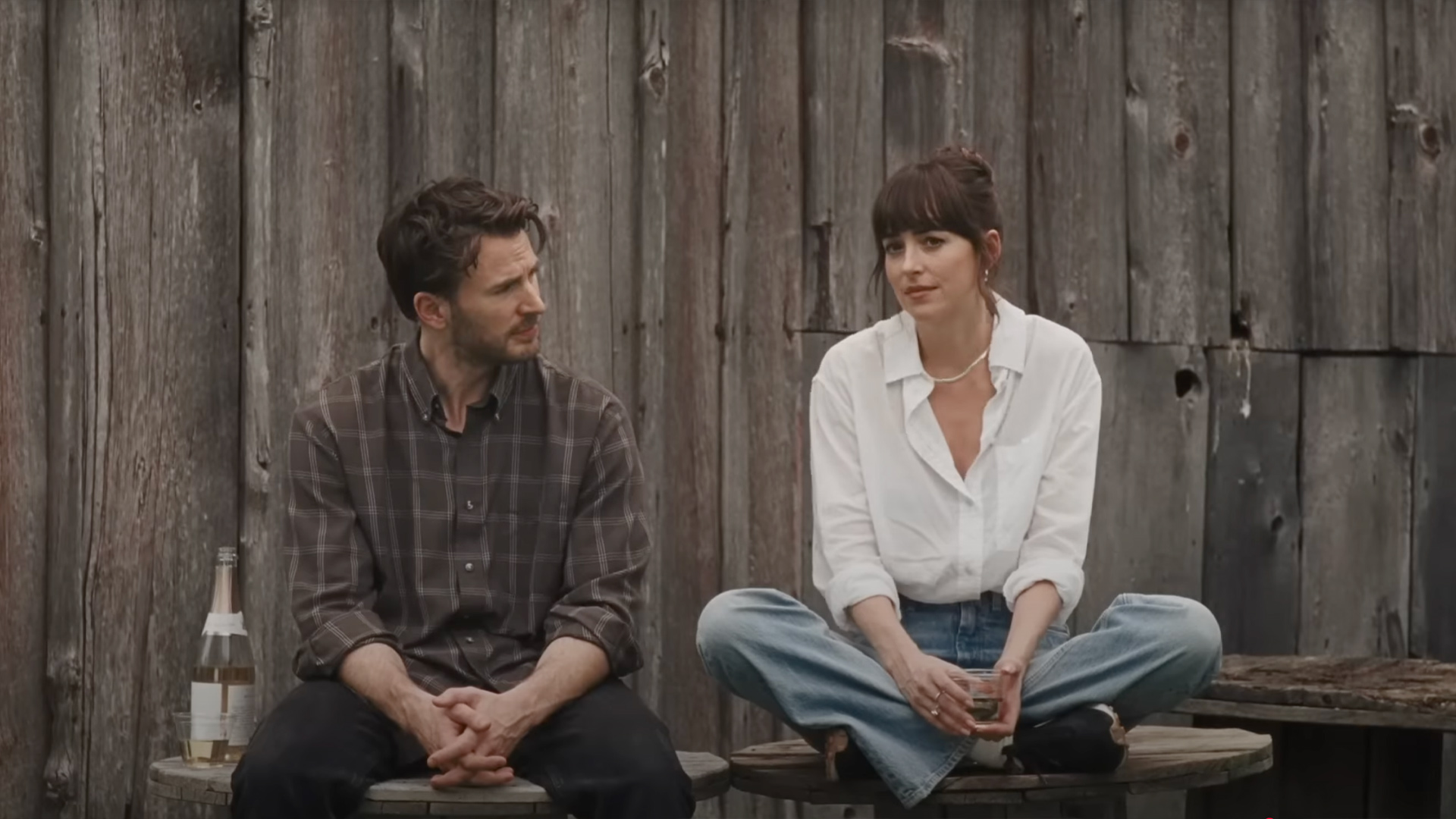
Writer/director Celine Song’s new movie, Materialists, ticks a lot of boxes. The marketing campaign certainly tried to tick them all, playing up the attractiveness of the cast and the romantic nature of the plot. The film’s trailer, with its clichéd narration, even used Madonna’s song “Material Girl” to get the message across. (Of course, it did.) It made the film appear to be something straight out of the late 2000s, a film that, like 27 Dresses, probably would have starred Katherine Heigl, Ed Burns, and James Marsden if it had been made around then.
And maybe that’s a good thing, because that kind of marketing will probably put a lot of butts in seats. Thankfully, the film is a good match that offers actual value.
Meghann Fahy broke out on the small screen in two of the buzziest TV shows of recent years, the second season of TheWhite Lotus (her performance was Emmy-nominated) and The Perfect Couple.
Now, she’s making the leap to the big screen in Drop, a faux-Hitchcockian thriller that casts her as a woman on the most stressful of first dates. Everyone from Julia Roberts (Sleepingwith the Enemy) to Rachel McAdams (Red Eye) to Jennifer Lopez (Enough) has starred in a similar kind of film, so you might say this type of role is a rite of passage for young actresses looking to expand their career prospects.
For more than three years, as my father’s Parkinson’s got worse and my visits to Florida to help take care of him became more regular and more challenging, I began writing a eulogy for him in my head. I had all the words and all the stories queued up and ready to go.
And then, when he actually passed away last week, and I had to put fingers to keyboard, I didn’t know what to say.