In the article, Pelly writes that the annual Spotify Wrapped campaign — part curated lists of most-listened to tracks and artists, and part marketing campaign for Spotify itself — “nudges listeners away from deep consideration and towards accepting a corporate-branded scorecard reflecting a very specific perspective on musical value. It encourages music fans to believe that the records they streamed the most must be the ones they liked the most, which is surely not always the case.”
Song Sung Blue is a movie for anyone who thought Deliver Me from Nowhere needed a few more hit songs. While the film about a Neil Diamond tribute band isn’t exactly a downer, like the Bruce Springsteen film is, it’s not entirely the upbeat entertainment the trailers and commercials promise, either.
In 1987, my grandparents took me to see the original production of Chess in London’s West End. It was thrilling, with its Cold War–inspired story and tech-forward production design, featuring a tiled stage that mimicked a chessboard and that lit up accordingly, and also rose, tilted, and helped bring the story to life visually. How very ’80s.
The real star of the show, though, was its pop-music score, written by ABBA’s Benny Andersson and Björn Ulvaeus, with lyrics by Tim Rice, which was first released as a concept album in 1984. It was high-octane musical-theater music, with songs that ranged from rock-infused grooves to heart-rending ballads, and that required big voices to do it justice. Some of those songs, such as “One Night in Bangkok” and “I Know Him So Well,” became pop hits in their own right, and for good reason. I can’t tell you how many times I’ve listened to that album over the years.
But, despite what my 13-year-old sensibilities thought, Chess wasn’t perfect. So, when the show crossed the pond to Broadway in 1988, the creative team made a lot of changes. Too many. In the process, they made a real mess of the show, including adding more to the story and changing some lyrics, all of which confused audiences. The production closed less than two months after it opened.
All these years later, Chess has remained a cult favorite — a show that’s loved for its music, but whose complicated book has given it a reputation for being a bit tricky. Multiple attempts have been made to clean it up, but the show just kept feeling like a series of powerful songs stitched over a geopolitical think-piece. After a while, that just became part of its charm.
Thankfully, the show’s creators haven’t given up. The new Broadway revival of Chess that opened last month at the Imperial Theatre (site of its 1988 production) has arrived with a kind of swagger that feels both overconfident and long overdue. This production doesn’t untie every narrative knot, but thanks to a powerhouse cast (especially the three lead performances), it gets more right than it gets wrong. In short, it exceeded my cautiously optimistic expectations.
Bradley Cooper’s Is This Thing On? is good, but not great, and it feels a bit disappointing after A Star Is Born and especially Maestro(one of my favorite movies of 2023). Both of those films exhibited the confidence of a director fully in command of his vision, but this latest one feels looser and a bit unsure of itself.
Cooper’s latest has moments of real insight and emotion, but it also meanders and is occasionally frustrating. You can see what he’s going for — something raw and human about creativity and connection — but the final product just doesn’t quite get there.
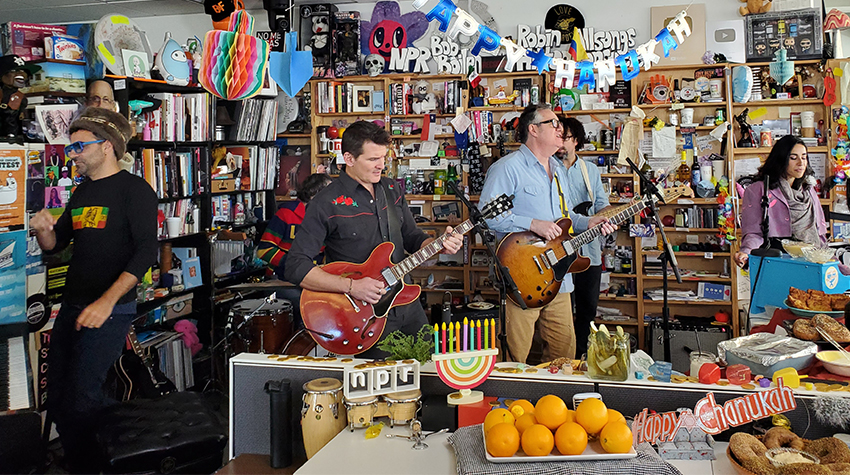
Despite what so many people think, Hanukkah is not “Jewish Christmas.”
Many years, it doesn’t even fall at the same time as Christmas. Oh, sure, it’s usually within the same month. But it’s not uncommon for Hanukkah to be over days, or even weeks, before December 24.
If you’re like me, and you never did get around to seeing the recent Tony Award-winning revival of Stephen Sondheim’s Merrily We Roll Along, or you did see it and you wish you could see it again (and again), director Maria Friedman has given audiences a time machine that goes right back to the Hudson Theatre, preserving her buzzy Broadway production for future generations.
Friedman, a British actress and director making her cinematic debut, didn’t just park a camera in the aisle during an actual performance. Rather, she’s produced a film that’s a bit of a hybrid, one that effectively captures the electricity of live theater and gives you the kind of intimacy you can’t quite get even from the best seats in the house. Yes, that means the film is stagey. But that’s exactly the point.
Merrily is in theaters now as a special-event release, and for musical-theater fans, it’s a genuine holiday gift.
Of all the accounts I’ve closed and the memberships I’ve terminated in the last year since he died (and since my mother sold their house and moved to New York), the one that’s still active is the one for his cell phone. In fact, the phone is still in my apartment, on my dresser, fully charged.
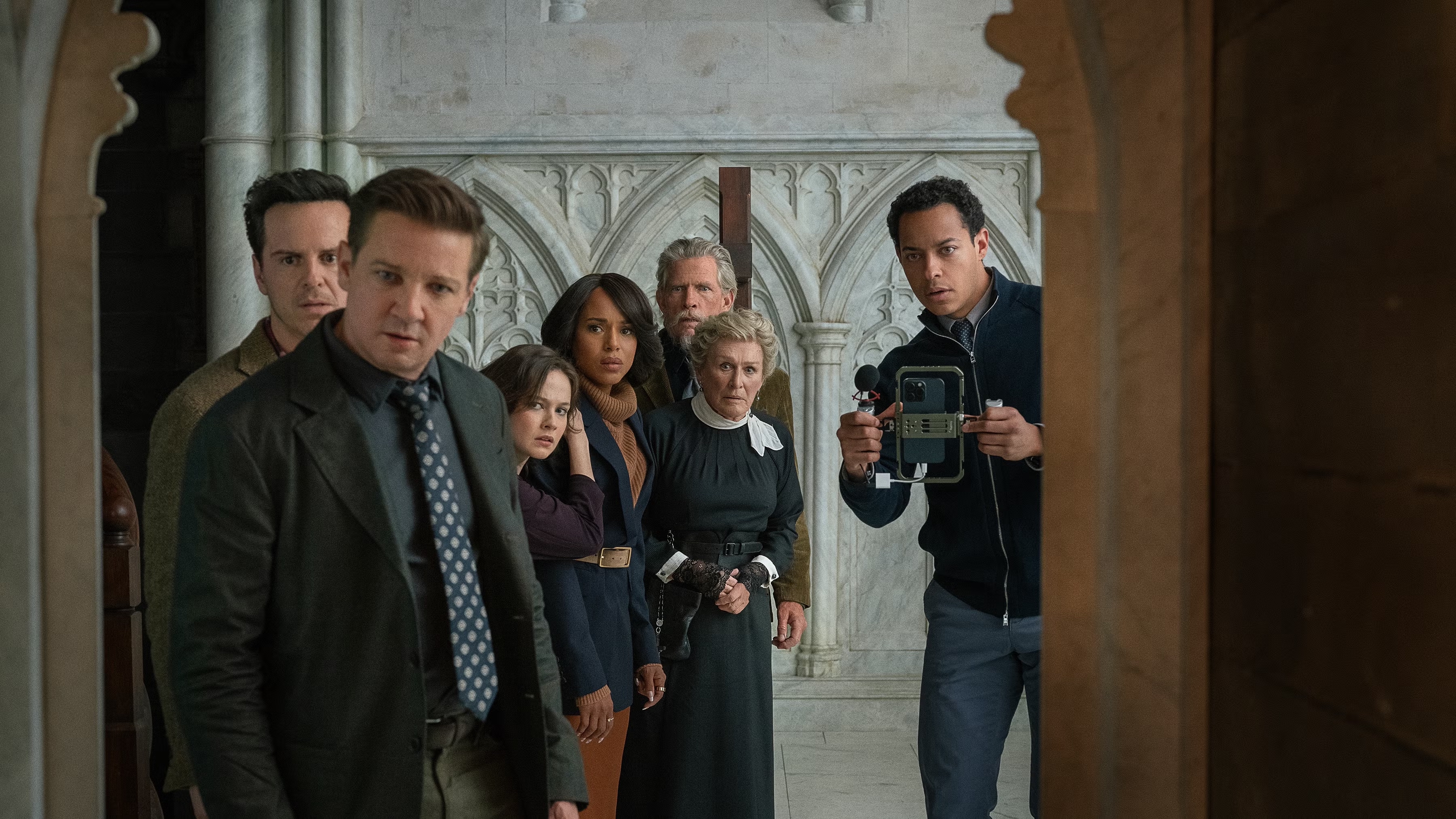
Three films into the Knives Out series and Rian Johnson still isn’t bored with his own funhouse — and neither am I. Each entry in the Agatha Christie–inspired franchise has told a different story with a different cast and setting, but they’ve all been mainstream crowd-pleasers that feel intelligently crafted rather than assembled by an algorithm, the rare series where “new installment” means “new flavor” instead of “same meal reheated.”
2025 has not been an easy year. I’ve spent much of it mourning my father, continuing to call for the return of the hostages that are/were still held captive in Gaza, absorbing the news of rising antisemitism all around the world, and trying to make sense of the increasingly tense and divided political scene here in the U.S.
That said, I’ve also spent a bit of time trying to get back to whatever “normal” is these days. Doing that meant going on a proper vacation for the first time since before Covid (yes, really), getting back into the routine of seeing (and reviewing) movies, and spending more time in Boston again than in Florida. It’s given me a lot of time to appreciate what I’d de-prioritized in recent years and how I enjoy spending my time.
One lesson my dad always taught me was to have perspective and to be grateful for what you have, rather than dwelling on the negative. So, in that spirit, here (in no particular order) is a list of some of the people, places, and things that I’m grateful for in 2025. A big thank you to all of them.
Thanksgiving is this week. Typically, it’s a time to show gratitude for the people, places, and things that bring value to your life. And I’ll do that.
Later.
But as I reflect on the year since last Thanksgiving, during which my father died and the war in Gaza continued and the wildfire of antisemitism spread even faster around the world and things in the U.S. got even more tense and divided, it’s worth noting that there is plenty I’m not grateful for.
So, in that spirit, and in no particular order, here are some of those people, places, and things I’m giving no thanks to this year.






 Martin's Musings