In the article, Pelly writes that the annual Spotify Wrapped campaign — part curated lists of most-listened to tracks and artists, and part marketing campaign for Spotify itself — “nudges listeners away from deep consideration and towards accepting a corporate-branded scorecard reflecting a very specific perspective on musical value. It encourages music fans to believe that the records they streamed the most must be the ones they liked the most, which is surely not always the case.”
In 1987, my grandparents took me to see the original production of Chess in London’s West End. It was thrilling, with its Cold War–inspired story and tech-forward production design, featuring a tiled stage that mimicked a chessboard and that lit up accordingly, and also rose, tilted, and helped bring the story to life visually. How very ’80s.
The real star of the show, though, was its pop-music score, written by ABBA’s Benny Andersson and Björn Ulvaeus, with lyrics by Tim Rice, which was first released as a concept album in 1984. It was high-octane musical-theater music, with songs that ranged from rock-infused grooves to heart-rending ballads, and that required big voices to do it justice. Some of those songs, such as “One Night in Bangkok” and “I Know Him So Well,” became pop hits in their own right, and for good reason. I can’t tell you how many times I’ve listened to that album over the years.
But, despite what my 13-year-old sensibilities thought, Chess wasn’t perfect. So, when the show crossed the pond to Broadway in 1988, the creative team made a lot of changes. Too many. In the process, they made a real mess of the show, including adding more to the story and changing some lyrics, all of which confused audiences. The production closed less than two months after it opened.
All these years later, Chess has remained a cult favorite — a show that’s loved for its music, but whose complicated book has given it a reputation for being a bit tricky. Multiple attempts have been made to clean it up, but the show just kept feeling like a series of powerful songs stitched over a geopolitical think-piece. After a while, that just became part of its charm.
Thankfully, the show’s creators haven’t given up. The new Broadway revival of Chess that opened last month at the Imperial Theatre (site of its 1988 production) has arrived with a kind of swagger that feels both overconfident and long overdue. This production doesn’t untie every narrative knot, but thanks to a powerhouse cast (especially the three lead performances), it gets more right than it gets wrong. In short, it exceeded my cautiously optimistic expectations.
If you’re like me, and you never did get around to seeing the recent Tony Award-winning revival of Stephen Sondheim’s Merrily We Roll Along, or you did see it and you wish you could see it again (and again), director Maria Friedman has given audiences a time machine that goes right back to the Hudson Theatre, preserving her buzzy Broadway production for future generations.
Friedman, a British actress and director making her cinematic debut, didn’t just park a camera in the aisle during an actual performance. Rather, she’s produced a film that’s a bit of a hybrid, one that effectively captures the electricity of live theater and gives you the kind of intimacy you can’t quite get even from the best seats in the house. Yes, that means the film is stagey. But that’s exactly the point.
Merrily is in theaters now as a special-event release, and for musical-theater fans, it’s a genuine holiday gift.
Chances are good you already know whether you’re going to see Wicked: For Good. That’s because, at this point, between the long-running Broadway show and the award-winning first film, the Wicked universe has garnered a large, devoted fanbase.
Suffice it to say, For Good arrives with some pretty high expectations and an incessant promotional campaign that has only made the movie more of a must-see for that fanbase. So, yes, maybe a review feels unnecessary.
Everyone, that is, except Lorenz Hart (Ethan Hawke), Rodgers’ former songwriting partner, who leaves the show during its title number and heads down the block to Sardi’s, where he proceeds to lambaste everything about the production, from its corny lyrics (pun intended) to the exclamation point in the show’s title.
It’s clear from the start that Hart is not just being catty; he’s also jealous of Rodgers and contemptuous of the show’s success. He knows it’s a lesser work. He still wishes he’d written it. “Am I bitter?” he asks the bartender (Bobby Cannavale). “Fuck yes!”
That’s the setup for Richard Linklater’s excellent new film, Blue Moon, which resists the usual biopic sweep, and focuses not on the stories behind Rodgers and Hart musicals like Pal Joey, On Your Toes, and Babes In Arms, or songs like “My Funny Valentine,” “The Lady Is a Tramp,” and the film’s title song, but rather, on the moment when Hart watches Rodgers leave him behind and move on to even greater success with Hammerstein. (The duo would go on to become the most successful songwriting team in American musical theater history, writing such enduring Broadway classics as Carousel, The King and I, South Pacific, and The Sound of Music.)
Maybe you’ve heard, but the movie adaptation of the long-running Broadway musical Wicked hits theaters later this month, starring Cynthia Erivo as Elphaba and Ariana Grande as Glinda. It looks fantastic.
As of this posting, I have not seen the movie. (Womp womp.) But here’s a fun fact: Back in the day, when she was starring as Elphaba in Wicked on Broadway, I interviewed Idina Menzel. The interview took place more than 20 years ago, in March 2004, before Menzel won the Tony award for the role. (And before Frozen, and before John Travolta called her “Adele Dazeem”, and before everything else that happened after she left the show.)
The article was the cover story of the May 2004 issue of Continental — yes, the inflight magazine of Continental Airlines. Menzel and I spoke over the phone, but I did go to New York shortly thereafter to see her in the show. And then, after Menzel and Kristin Chenoweth bewitched me in their iconic roles (the latter played Glinda), I went backstage to hang out with Ms. Elphaba in her dressing room — after she’d showered and washed off all the green makeup, of course.
Unfortunately, these were the days before iPhones, otherwise I’d probably have photographic proof of this. Oh well.
Another fun fact: Six years later, in 2010, I interviewed Chenoweth, as well. (Again, over the phone.) It was when she was starring in the first-ever Broadway revival of Promises, Promises. During our conversation, I asked Chenoweth why she thought Wicked had touched such a chord in so many people. “There is in every one of us a little bit of Elphaba and a little bit of Glinda,” she explained. “Elphaba, who is green and is immediately outcast because of that, actually has quite a tough little exterior but is not so tough on the inside. Glinda is pretty on the outside, but what drives her? Insecurity. And then she grows into heartbreak. The show is about love and forgiveness and friendship, and those are the reasons why it has become a classic. Nothing makes me prouder than to have been a part of something like that.”
Anyway, I know you aren’t reading this post to learn more about me. You want to read my article about Menzel. So here it is, in its entirety. Enjoy!
Every year, I’m fond of looking back through the music I’ve added to my annual Time Capsule playlist on Spotify and seeing what it says about those 12 months, if anything.
Rather than ranking the “best” music of the year, like so many music writers and publications do, or letting Spotify tell me my most-listened-to songs and artists, I find the Time Capsule playlist is a more accurate representation of not only what I listened to but what I want to remember about the year. Often, it reveals a narrative, providing a soundtrack of sorts for the last 12 months that helps me recall good times and bad, significant milestones, and the everyday joys of driving around with a good song playing at top volume.
This year, when taken as a whole, my Time Capsule playlist is kind of an odd collection of tunes — but then again, it was also kind of an odd year (more on that in another blog post). There’s less new music than usual, some definite themes or trends, and a bunch of seemingly random inclusions. The playlist (which is largely chronological and not ranked) is all over the place.
In short, what appears here requires a little explanation.
When directors make movies, they work with a music supervisor and a composer to create a soundscape for the film that will deliberately help drive the narrative, boost the desired emotional impact, and leave a distinct impression in the minds of viewers. When done well, hearing a particular song or musical motif included in the movie may trigger memories of that work.
In real life, the process happens somewhat in reverse: The “narrative” of our lives moves forward organically, and the music that triggers memories of certain times and events is not necessarily planned. And, rather than the music itself telling a story, it’s up to us to look at the collection of songs and pick out the themes from the soundtrack in hindsight. In this way, music serves to remind us of the times we’ve lived through, and the music that was playing while we lived — with this caveat: The soundtrack often reflects the times we want to remember. More importantly, it’s made up of the music we want to remember.
I listened to a lot of music in 2021, and my “Now” playlist was everchanging. But as noted, the soundtrack of my year — a.k.a. my 2021 Time Capsule Playlist — largely reflects what was good about these last 12 months.
It was March of 2008. Barack Obama had not yet been elected President. No Country for Old Men had just won Best Picture at the Oscars. Among the most popular songs were “Low” by Flo Rida and T-Pain, “Love in This Club” by Usher, and “Love Song” by Sara Bareilles. And around the country, many Americans were unable to identify the Founding Father whose name and face were on the $10 bills they used every day.
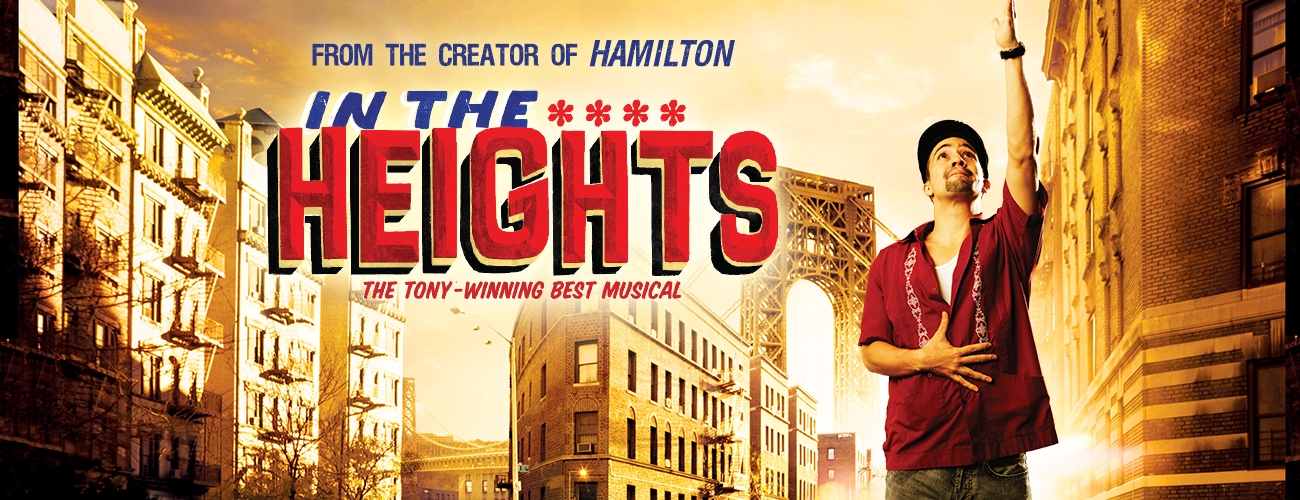
That month, after a successful and Drama Desk Award–winning run Off-Broadway, a new show moved uptown to the Great White Way, carrying with it the hopes of producers and investors that it would bring new, younger, and more diverse audiences to Broadway and fill the void left when Rent closed later that year. As successful as this production was, though, no one could have predicted that over the course of the next decade, its creator and star would break boundaries and revolutionize Broadway.
That show, of course, was In the Heights, and its creator and star was a young up-and-comer named Lin-Manuel Miranda — who, as if you need to be reminded, would go on to write the pop-culture phenomenon known as Hamilton.
In March 2008, Miranda was just 28 years old and still largely unknown. He’d traveled the world and performed as part of Freestyle Love Supreme, the hip-hop improv group he co-founded, but Miranda surely wasn’t a household name yet. Nor was he the social media influencer he is today — though, at the time, he did have an amusing YouTube channel where he shared home-video clips of his younger self lip-syncing to songs like “King of Wishful Thinking” and freestyle-rapping about the heat with his friends.
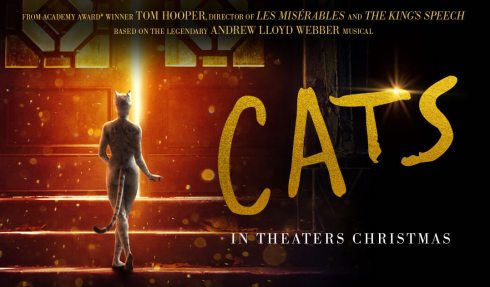
Full disclosure: I’m not a fan of Cats the musical. I’ve seen a lot of Broadway shows over the years, and Andrew Lloyd Webber’s feline songfest is one show I really didn’t like. I even enjoyed Starlight Express more. Yes, I like the roller-skating show more than I like Cats. If you know anything about Starlight Express, you know that’s really saying something.
But even with that in mind, I wasn’t prepared for just how much I didn’t like Cats the movie. We all knew going into it, based on the trailers, that this wasn’t going to be a good movie. But holy hell, is it bad. Jennifer Hudson is pretty much the only redeeming thing about it. Continue reading →


 Full disclosure: I’m not a fan of Cats the musical. I’ve seen a lot of
  Martin's Musings