In the article, Pelly writes that the annual Spotify Wrapped campaign — part curated lists of most-listened to tracks and artists, and part marketing campaign for Spotify itself — “nudges listeners away from deep consideration and towards accepting a corporate-branded scorecard reflecting a very specific perspective on musical value. It encourages music fans to believe that the records they streamed the most must be the ones they liked the most, which is surely not always the case.”
Song Sung Blue is a movie for anyone who thought Deliver Me from Nowhere needed a few more hit songs. While the film about a Neil Diamond tribute band isn’t exactly a downer, like the Bruce Springsteen film is, it’s not entirely the upbeat entertainment the trailers and commercials promise, either.
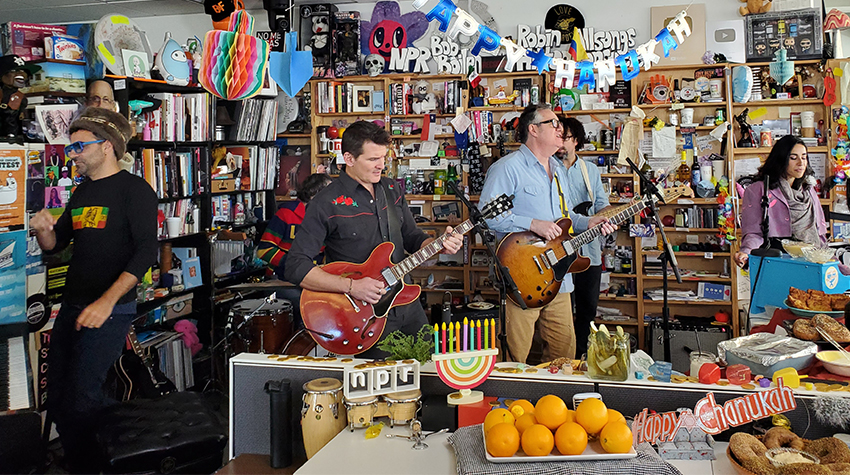
Despite what so many people think, Hanukkah is not “Jewish Christmas.”
Many years, it doesn’t even fall at the same time as Christmas. Oh, sure, it’s usually within the same month. But it’s not uncommon for Hanukkah to be over days, or even weeks, before December 24.
Eschewing the conventional rock biopic format — in which a significant portion of a performer’s life is covered in flashback, usually from the moment of a pivotal career milestone (see Walk the Line or, for a less serious take, Walk Hard) — Scott Cooper’s Springsteen: Deliver Me from Nowhere defies expectation.
It zeroes in on a specific year, starting in 1981 on the final night of Bruce Springsteen’s The River tour, during which he achieved his greatest success to date. Not surprisingly, his record label wanted to strike while the iron was hot, but 32-year-old Bruce (The Bear’s Jeremy Allen White) was uncomfortable with all that fame and still grappling with some heavy, unresolved issues involving his father. So, he decided to retreat to a house in Colts Neck, N.J., to chill out for a bit. As he tells his longtime friend and manager Jon Landau (Jeremy Strong, Succession) early on here, “I just need to get home and slow things down a little.”
Accordingly, when movies are made about our favorite performers, we want to see them done well, and for those artists to be represented credibly and respectfully. The more iconic the performer, the greater the risk.
Not surprisingly, the results are usually a mixed bag, especially in recent years. For every Bohemian Rhapsody, in which Rami Malek channeled Freddie Mercury and won an Oscar for it, there’s an I Wanna Dance with Somebody, in which Naomi Ackie barely made an impression as Whitney Houston.
Better were films like Elvis and Rocketman, in which Austin Butler and Taron Egerton impressively captured the vibes of Elvis Presley and Elton John, respectfully, even if they didn’t exactly look like those legendary artists. They both did some of their own singing, too, in addition to lip-synching to the original tracks. (For the record, Elvis was one of my favorite movies of 2022, and Rocketman was an honorary mention in 2019.)
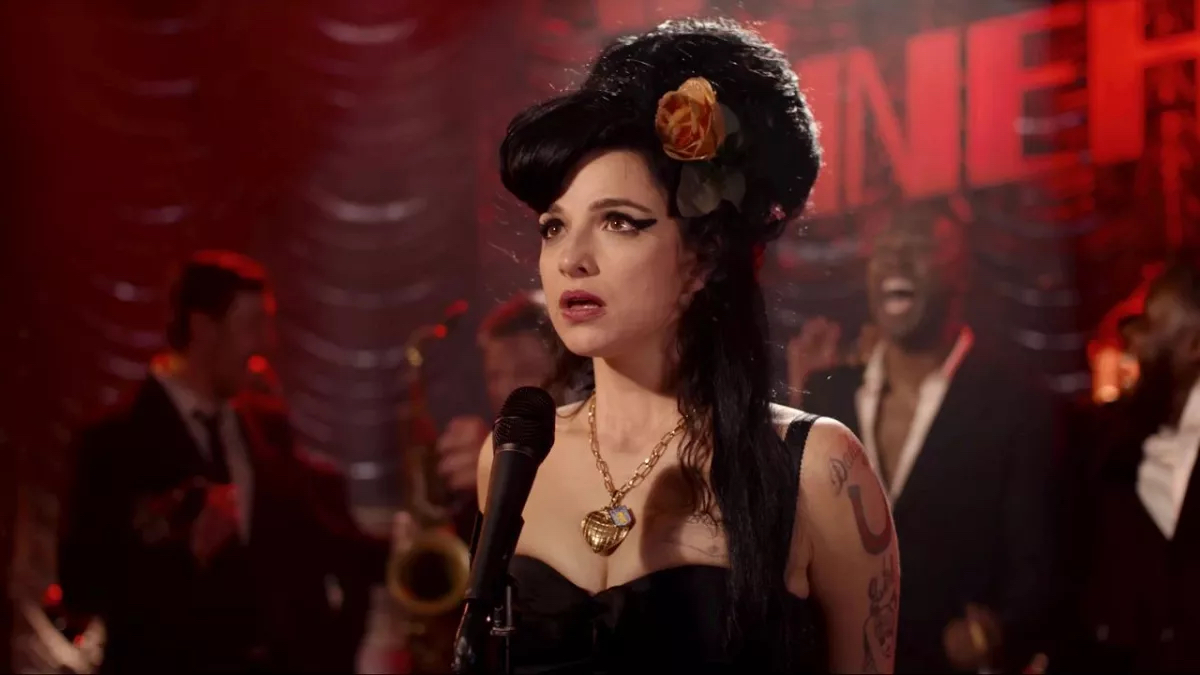
Now we have Back to Black, in which Marisa Abela (one of the stars of the HBO show Industry) plays one of my all-time favorite artists, Amy Winehouse.
What’s happening on college campuses across the country right now is nothing short of disgusting and distressing. Thousands of students — and faculty members, too — are protesting and creating encampments in support of the Palestinian people.
Every year, I’m fond of looking back through the music I’ve added to my annual Time Capsule playlist on Spotify and seeing what it says about those 12 months, if anything.
Rather than ranking the “best” music of the year, like so many music writers and publications do, or letting Spotify tell me my most-listened-to songs and artists, I find the Time Capsule playlist is a more accurate representation of not only what I listened to but what I want to remember about the year. Often, it reveals a narrative, providing a soundtrack of sorts for the last 12 months that helps me recall good times and bad, significant milestones, and the everyday joys of driving around with a good song playing at top volume.
This year, when taken as a whole, my Time Capsule playlist is kind of an odd collection of tunes — but then again, it was also kind of an odd year (more on that in another blog post). There’s less new music than usual, some definite themes or trends, and a bunch of seemingly random inclusions. The playlist (which is largely chronological and not ranked) is all over the place.
In short, what appears here requires a little explanation.
Like so many other publications, the New York Times recently published a roundup of the “best songs” of the year. Reading through it, I was instantly struck by how many of the songs and artists I had never heard of before. Sure, Beyoncé, Taylor Swift, and the 1975 all made appearances — I knew all of them, of course, even if I’d only ever heard the 1975’s song — but most of the others I was learning about for the very first time.
Similarly, I only knew three of the songs on Paste’s list of the 50 best songs of 2022.
It’s not that I don’t listen to a lot of music. According to Spotify Wrapped, I listened to 8,314 minutes of it this year — more than 54% of other listeners in the United States, apparently. And that’s not including all the music I listened to on the radio, or that I’d purchased or downloaded, or that I heard live, or that I streamed via YouTube or other services. When I wasn’t listening to podcasts like Smartless, that is.
And it’s not that I don’t listen to popular artists. Heck, my top artist this year (again, according to Spotify) was Harry Styles.
The thing is, music, more than most any other entertainment, is personal. So, how we classify the “best” or “top” songs, albums, or artists varies. My favorites are likely not your favorites. And I’m more than okay with that.
Which is why, every year at this time, I don’t even bother to compile a year-end best-of list. Nor do I put much stock into Spotify’s roundup of what my most listened-to tracks were — though, admittedly, the algorithm doesn’t lie; I did listen to a lot of Harry Styles this year.
Rather, I prefer to review my annual “time capsule” playlist and let that define my year in music. Conveniently, the playlist also provides a soundtrack of memories for how the year played out (pun intended).
When directors make movies, they work with a music supervisor and a composer to create a soundscape for the film that will deliberately help drive the narrative, boost the desired emotional impact, and leave a distinct impression in the minds of viewers. When done well, hearing a particular song or musical motif included in the movie may trigger memories of that work.
In real life, the process happens somewhat in reverse: The “narrative” of our lives moves forward organically, and the music that triggers memories of certain times and events is not necessarily planned. And, rather than the music itself telling a story, it’s up to us to look at the collection of songs and pick out the themes from the soundtrack in hindsight. In this way, music serves to remind us of the times we’ve lived through, and the music that was playing while we lived — with this caveat: The soundtrack often reflects the times we want to remember. More importantly, it’s made up of the music we want to remember.
I listened to a lot of music in 2021, and my “Now” playlist was everchanging. But as noted, the soundtrack of my year — a.k.a. my 2021 Time Capsule Playlist — largely reflects what was good about these last 12 months.
In times of stress, as 2020 most certainly was, music always seems to serve as a comfort. And over the last nine and a half months, while some other forms of entertainment and culture had to be put on hold for safety reasons, there was never a shortage of music to listen to and seek comfort from.
Sure, we couldn’t crowd together for concerts, or see other kinds of live performances in person — such as Broadway shows and other theatrical productions. And that definitely sucked. As Dave Grohl wrote all the way back in May, “I’m hungry for a big old plate of sweaty, ear-shredding, live rock and roll, ASAP. The kind that makes your heart race, your body move, and your soul stir with passion.” Yeah, me too.
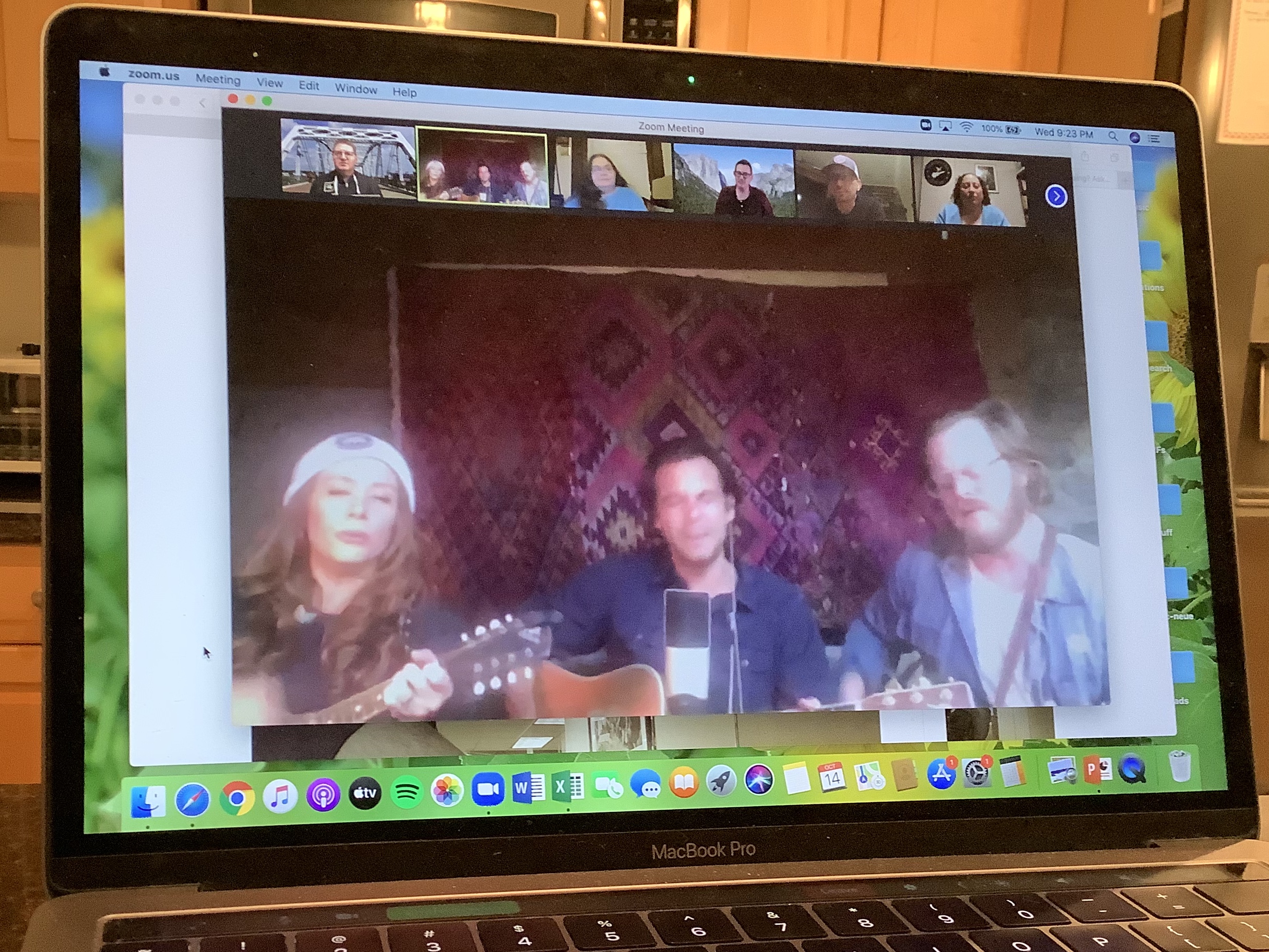
But on the other hand, this year, the artists came to us, hosting intimate live streams on Instagram, Facebook Live, Zoom, or other platforms; performing from their homes on various TV or online specials; sharing archival performances on YouTube; and more. It wasn’t what we hoped for back in January, and there were some kinks to work out at first. But in the end, it was actually kind of cool.





 Martin's Musings