John Carney is a filmmaker who frustrates me.
He makes music-centric movies that fall into two buckets. The first includes small-scale films like Once and Sing Street that are full of heart and feature hardscrabble characters who find salvation in their music. Both films also have soundtracks with one great song after another. (Perhaps not coincidentally, they both have been adapted for the stage; Once even won the Tony Award for Best Musical in 2012.)
But Carney also tends to swing for the mainstream, and that’s when we get movies like Begin Again and Flora and Son, both of which feature more well-known actors (like Mark Ruffalo, Keira Knightley, and Joseph Gordon-Levitt) playing characters whose passion for music doesn’t ring as true. Likewise (and not surprisingly), the music in those films isn’t as good.
Unfortunately, Carney’s latest film, Power Ballad, falls in that latter bucket. And it’s a shame, because this one has all the makings of a true crowd pleaser. It’s just a bit off-key. Not a total trainwreck, but definitely not the kind of song you’re going to put on repeat.
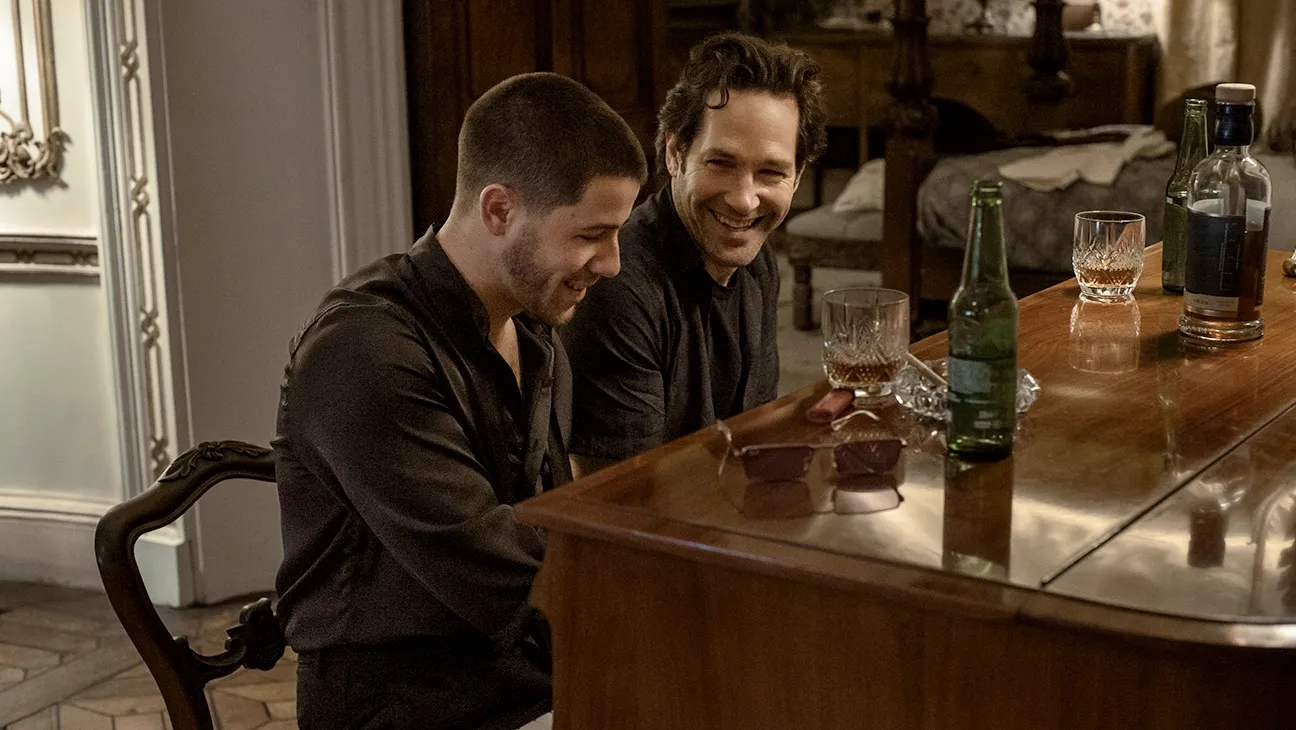
Power Ballad stars Paul Rudd as Rick, a washed-up musician now fronting a wedding band in Dublin. He’s basically “dad rock” personified. Or a “human jukebox,” as one bandmate bluntly puts it.
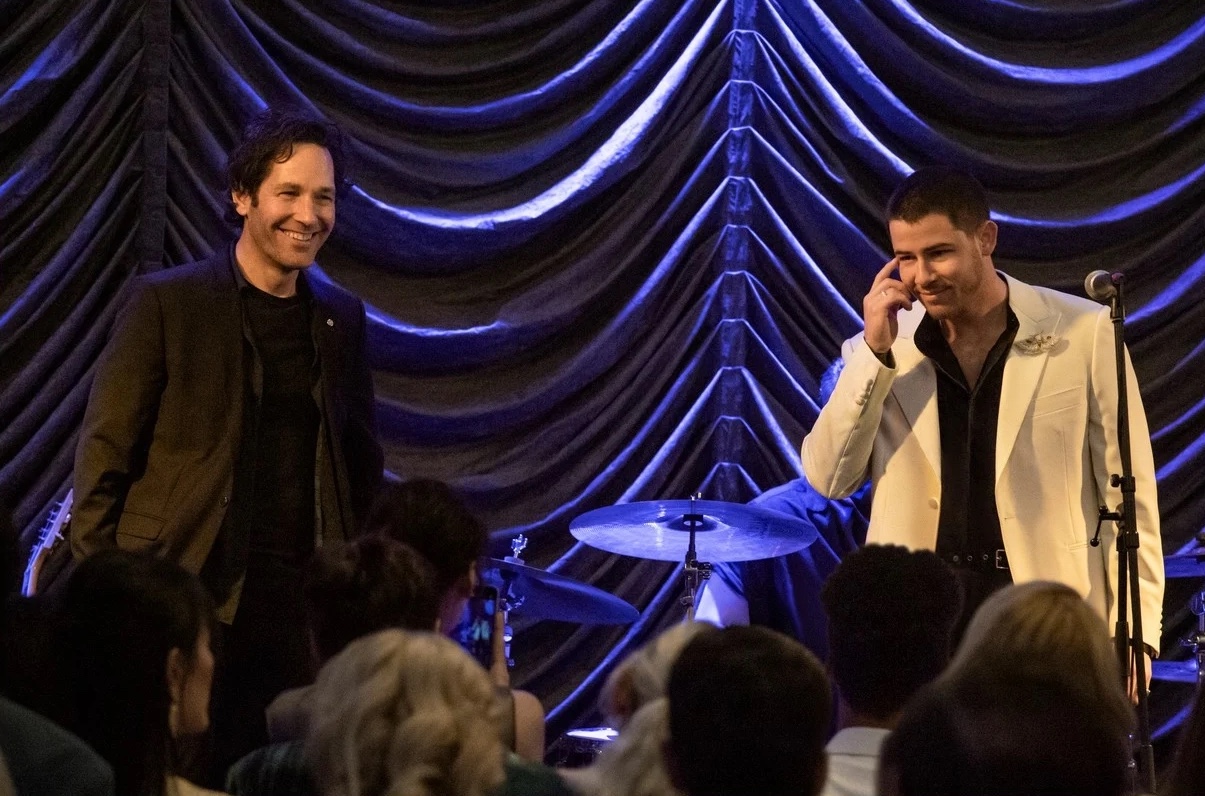
Back in the day, Rick was a singer/songwriter building his career, with the dream of playing Madison Square Garden — until he got off the train to settle down with a fan he met at one of his shows. Now, he makes a living playing at parties, where he performs other people’s music, other people’s hits.
At one such event, he meets Danny (Nick Jonas), an ex–boy band star trying to claw his way back to relevance. They connect, they jam, and Rick shares an original song he’s never recorded — the kind of raw, personal track Carney movies usually build their souls around.
Later, back in the States and struggling to come up with material for his new album, Danny remembers Rick’s song and decides to record it as his own, without giving Rick credit. And wouldn’t you know it, the song’s a massive hit. This, of course, frustrates Rick, who sets out to claim the recognition and the fortune he believes he deserves.
That central conflict should sting. It should ache. Instead, it kind of shrugs.
Part of the problem is tone. The movie can’t decide if it’s a heartfelt drama, a satire of the music industry, or a low-key comedy. Carney fills Power Ballad with far-fetched scenarios and so much corny dialogue about how music always means something — to the writer, to the performer, to the listener — that you can’t help but groan.
And then there are moments where it feels like you’re supposed to laugh, but it’s never quite clear if the joke is intentional or if the audience is just reacting to how awkward the scene is. (When I saw the movie, the guy sitting next to me laughed a bit too hard at everything. It was so annoying that it made the movie seem less funny.)
Rudd, who’s usually effortlessly charming, pushes a little too hard here, and at times, he overplays the character. His Rick swings between lovable dude and caricature, and not always in a good way. Ultimately, he’s just the wrong actor for this role.
Meanwhile, Jonas goes in the opposite direction; he’s so understated that he barely registers. For a character who’s supposed to be a former pop sensation, Danny has the charisma of a guy who never made it. You keep expecting him to pop, to give you something — especially when he’s on stage performing — but it never really happens.
And then there’s the music. This is where Carney films are supposed to soar. (I mean, seriously. Have you heard the Sing Street soundtrack?) The big track here, the one that drives the entire plot, is … fine. Not bad, not great, just aggressively okay.
The first time you hear “How to Write a Song (Without You),” it barely registers. But by the seventh or eighth time (yes, they really hammer it home), it becomes the kind of earworm you don’t love but also can’t escape. Which might be the most realistic commentary on the music industry the film accidentally makes.
To its credit, Power Ballad isn’t completely devoid of charm. There are small, self-aware touches — like a street busker playing “Falling Slowly,” the Oscar-winning song from Once — that remind you of the magic Carney is capable of. But those moments feel more like echoes of better movies than anything fully realized here.
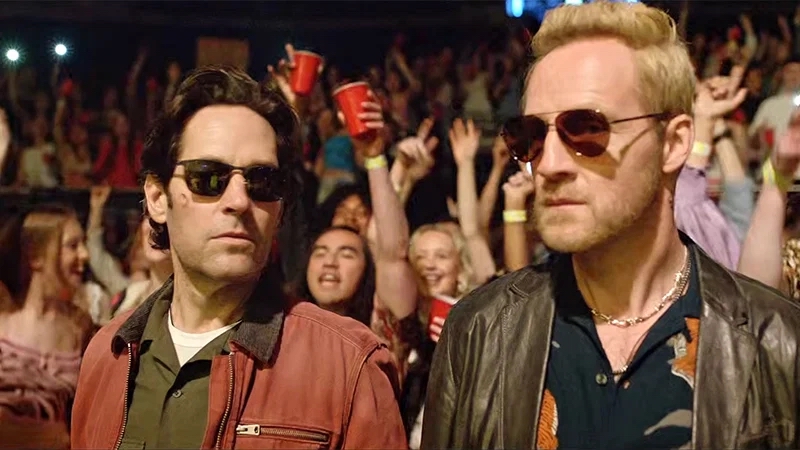
They also make you wonder if all of Carney’s films exist in the same world. Is there a Carneyverse? Hmmmm … Apparently so. Further evidence comes from Jack Reynor, making his third appearance in a Carney film, who plays Danny’s manager.
What’s most frustrating about Power Ballad is how close it all comes to working. The bones are solid. The themes of authenticity, ownership, and the meaning of music are classic Carney territory. But the execution feels oddly hollow, like a wedding-band cover version of a song that used to mean something.
In the end, Power Ballad is listenable, watchable, and occasionally enjoyable, but it never quite hits the emotional high note it’s aiming for. It’s not a disaster. It’s just … forgettable. And coming from Carney, that might be the biggest disappointment of all.
I’m giving it a B–.


What say you? Leave a comment here.