
Scarlett Johansson sure didn’t choose an easy, vanity project for her directorial debut.
Yes, Eleanor the Great is another enjoyable, well-acted outing in which June Squibb (Thelma) plays a spunky old woman who still has a lot of life left in her, despite her relatives wanting to shut her down.
And it’s a very nice showcase for Johansson to celebrate her Jewish roots — surprisingly so, given that she hardly ever mentions her heritage and has said very little (if anything) in support of the Jewish people or Israel since October 7.
But the film is centered around a problematic plotline that will probably give many viewers the ick and that detracts from what’s good about it overall.
Squibb plays the titular Eleanor, a 94-year-old Jewish woman who relocates from Florida to New York after the death of her longtime friend and beloved roommate, Bessie (Rita Zohar), a Holocaust survivor. She moves in with her daughter (Jessica Hecht, from Friends), who makes no time for Eleanor, and Eleanor’s college-age grandson (Cole Tristan Murphy). Their avoidance makes Eleanor feel even more alone and adrift.
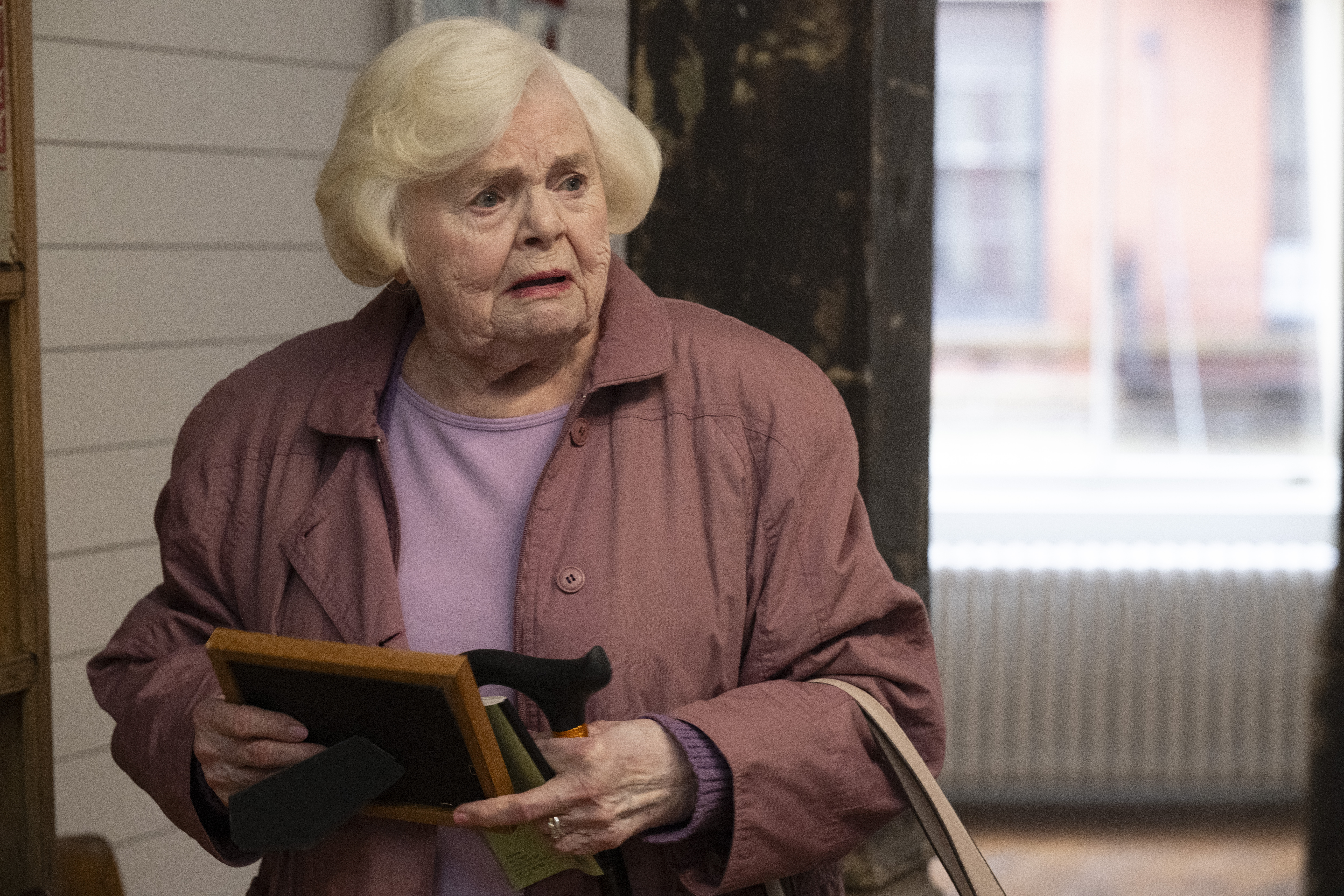
Then, one day, while at the local Jewish Community Center, Eleanor unknowingly wanders into a support group for Holocaust survivors. Before she can get up to leave, she’s embraced by this new community, and in the spur of the moment, shares Bessie’s story as her own. Eleanor heard Bessie tell the tale so many times over the years, and she knows it so intimately, that the group has no reason to doubt its authenticity. She’s obviously aware of the deception, but Eleanor feels it’s keeping Bessie’s legacy alive to tell her friend’s story, and that she’s not causing any damage by telling it herself and not acknowledging the source.
The story so moves a journalism student named Nina (Erin Kellyman), who happens to be observing the group on the day Eleanor attends, that she decides to feature Eleanor in a class project. Soon, what Eleanor thought was a simple white lie begins to snowball, bringing her unwanted attention — but also, the kind of friendship she’d been missing since Bessie passed.
You can probably see where this is going.
It’s a premise that will surely make viewers uncomfortable — or should, anyway. According to multiple surveys around the world, an increasing number of people either deny the Holocaust happened or don’t even know what the Holocaust is. Watching someone lie about being a survivor does a tremendous disservice to the dwindling number of actual survivors still with us (as of an April 2025 report, there are only 220,800 left) who have legitimate — and horrific, heartbreaking — stories to tell, given that there is already such skepticism about what they went through.
What’s ironic is that Johansson cast some of these actual survivors to play the support group. And yet, she and screenwriter Tory Kamen (making her feature debut, too) don’t give any of them the chance to tell their stories. Not even briefly. It’s rather startling that Johansson would go to the effort of hiring these people (and would make it a part of the film’s publicity) and then not even give them speaking roles.
The exception to this is Bessie, whose fictional story is woven throughout the movie, and is told in an appropriately emotional fashion by Zohar. It’s affecting, probably because Zohar is a survivor, too; apparently, she was born in a concentration camp — a fact the film’s official press notes oddly doesn’t mention.
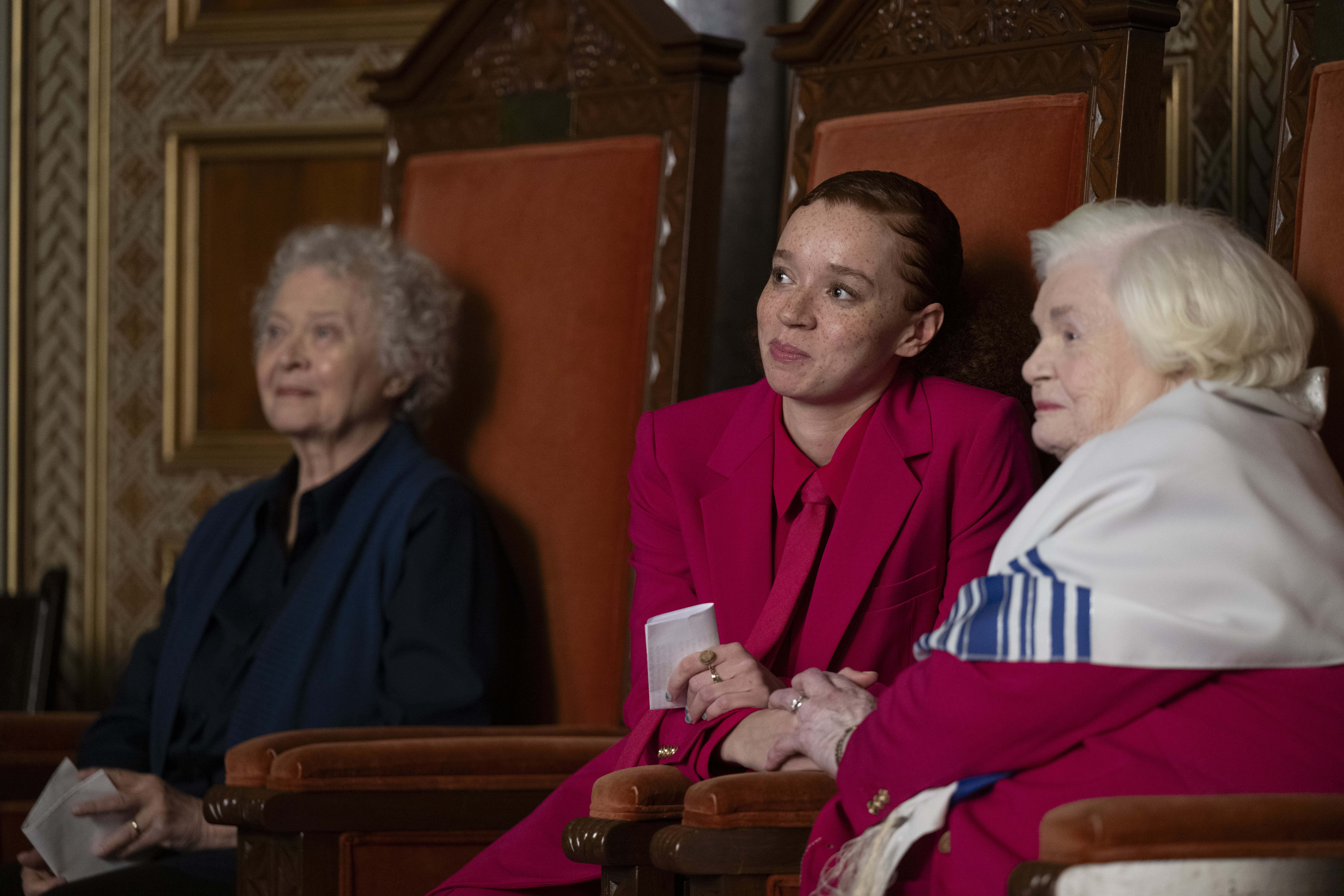
And it’s a shame, because, in spite of this (significant) issue, Eleanor is, generally, a decent directorial debut for Johansson.
Key to that is an understanding of the need to keep things simple and intimate. Working with cinematographer Hélène Louvart, Johansson often chooses close-up shots to capture conversations, allowing the audience to take in every moment where Squibb expresses sadness, confusion, or joy — or when she’s just being a smartass. (It also was not lost on me that Squibb spends most of the movie sitting. That was probably a necessity given the actress’s age, but it’s something that doesn’t take away from her performance.)
Johansson shows a gift for directing all of her actors, and she doesn’t overdo the heavy emotions her characters are grappling with. Like Eleanor, Nina is also grieving, and Kellyman and Squibb’s rapport, while unconventional, is charming. Likewise, the tension between Nina and her news-anchor father, played by Chiwetel Ejiofor (12 Years a Slave), feels authentic. (That fact that neither of them appears to be the type of journalist who does a modicum of background research on their subjects? That’s less authentic.)
Johansson also gives the movie a real sense of place, setting Eleanor in multiple New York locations, from the Upper East Side to the High Line to Coney Island.
It’s not that Eleanor has malicious intent for passing off Bessie’s story as her own. She’s no villain — and in Squibb’s hands, she’s actually a sympathetic character (especially in the climactic scene when the truth comes out), all things considered.
And that, ultimately, is what makes the film so complicated. Eleanor essentially asks: Whose responsibility is it to share Holocaust survivors’ stories when they are no longer with us? Are they the only ones who can (and should) share them? Whether you’ll forgive Eleanor (and Johansson) for her transgression and what you think of the movie will probably depend on how you answer those questions.
Me? I’m giving Eleanor the Great a not-so-great B–.
 Martin's Musings
One Response to “Eleanor the Not-So-Great”